Quick Picks: Top 3 in 30 Seconds
Don't have time to read the full post? Start here.
 Editor's Pick
 Styled lifestyle image. Click through to view current Amazon product photos and pricing.
Unique Loom Collection Casual Transitional Solid Heathered Indoor/Outdoor Flatweave Area Rug (5' 1" x 8' Rectangle, Beige/Ivory)
Best for: Small patios that want the 5×7 sweet spot without pattern
$88.99
View on Amazon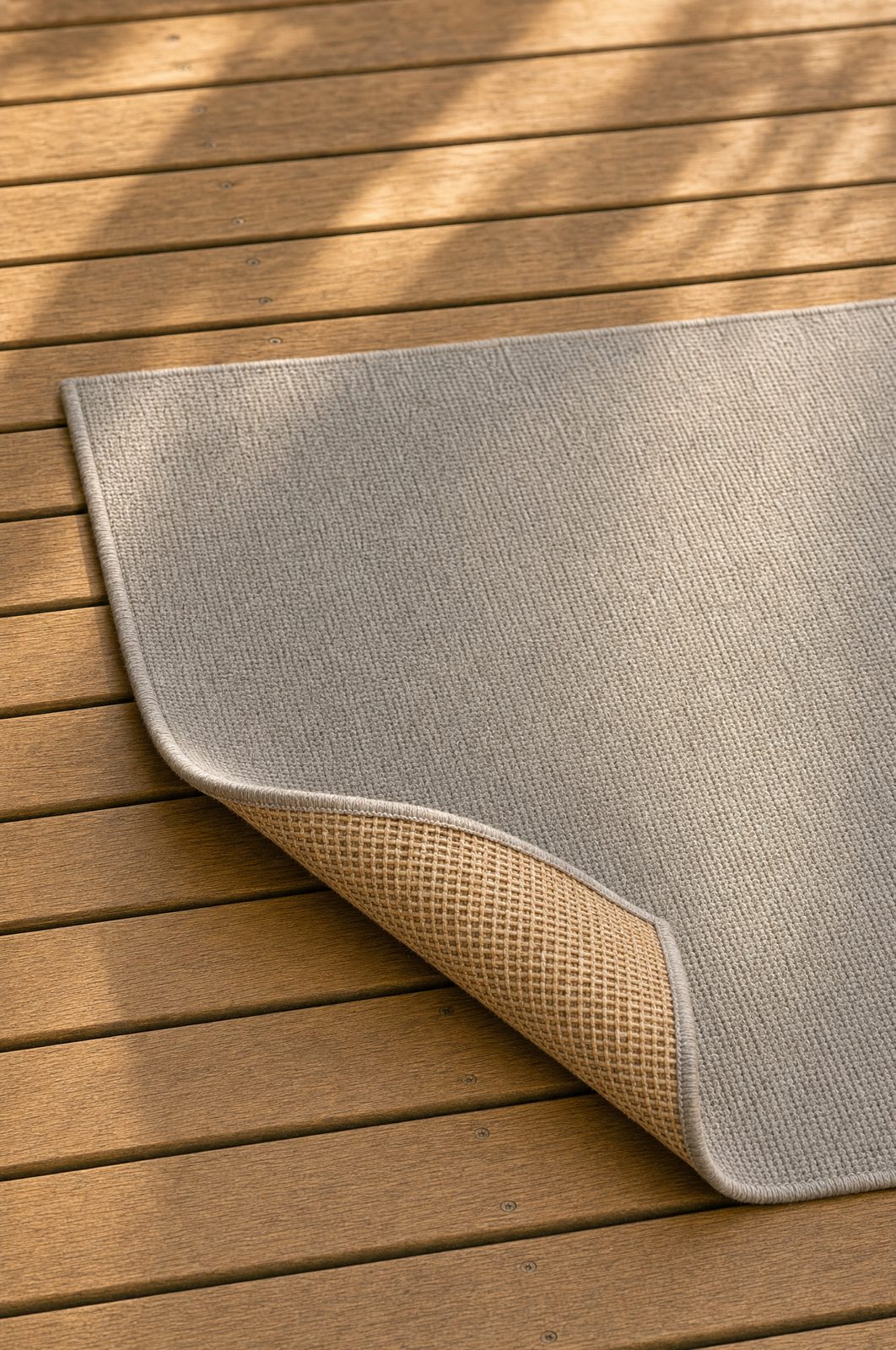
Styled lifestyle image. Click through to view current Amazon product photos and pricing.
Fab Habitat Outdoor Rug - Waterproof, Fade Resistant, Crease-Free - Premium Recycled Plastic - Neutral Ombre - Porch, Deck, Balcony, Mudroom, Laundry Room, Patio - Big Sur - Ash - 3 x 5 ft
Best for: Renters whose first outdoor rug needs to move with them
$46.99
View on Amazon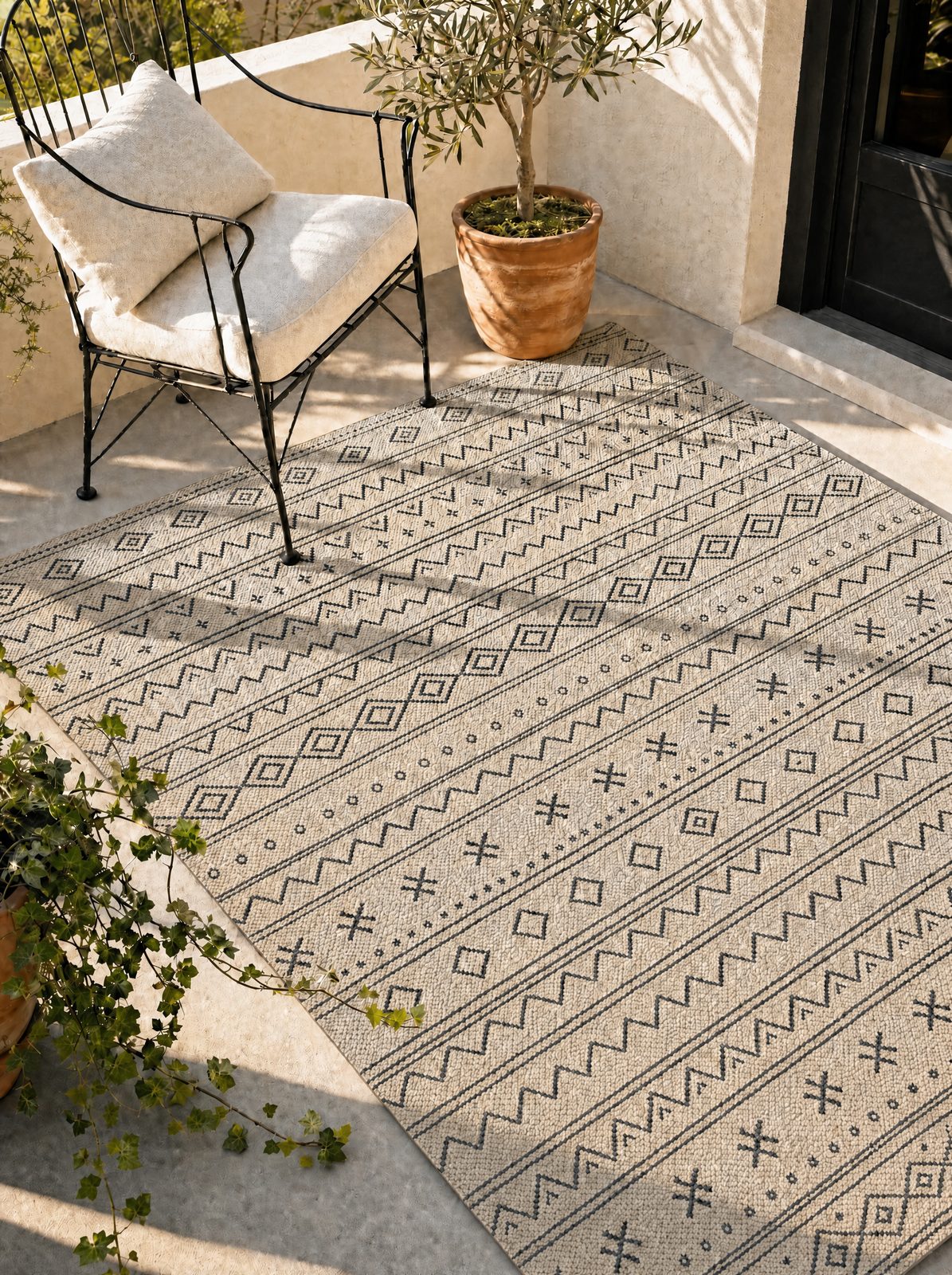
Styled lifestyle image. Click through to view current Amazon product photos and pricing.
JONATHAN Y Moroccan Geometric Indoor/Outdoor Area Rug 5' x 8', Natural/Black, Ourika Textured Weave
Best for: Designer look at a non-designer price
$70.00
View on AmazonTL;DR: Why do cheap outdoor rugs look like plastic mats? Because they’re flat, single-tone solids with no surface texture — uniform color reflects light evenly and reads as plastic. The fix isn’t a bigger budget, it’s a heathered weave: the Unique Loom heathered flatweave ($88.99, 4.5 stars across 7,364 reviews) mixes warm and cool tones for real depth, and a low-contrast pattern like the JONATHAN Y Moroccan ($70, 4.7 stars) hides the flat look entirely.
It’s the texture, not the price. A cheap-looking outdoor rug is almost always a flat, single-color solid — uniform polypropylene that bounces light back evenly, which your eye reads as plastic. Spend more on another flat solid and you get a more expensive plastic mat. The rugs that look intentional share one trait: a surface with tonal variation, either heathered fibers or a real pattern.
That’s the whole secret, and it means you can fix the cheap look for under $90. Here’s exactly what causes it and which weaves dodge it.
What Actually Makes a Rug Look Like Plastic?
Three things, in order of how much they matter:
- Flat, uniform color. One dead-flat tone has nothing for light to catch. A heathered mix of beiges reads as depth; a single beige reads as a bath mat.
- High sheen fiber. Cheap polypropylene can be spun with a slight plastic shine. Matte-finish or higher-twist fibers kill the gleam.
- Too-perfect edges and weave. Some budget rugs photograph crisp, then arrive looking molded rather than woven. Real weave structure — visible texture — is what separates rug from mat.
Notice price isn’t on that list. As the New York Times’ outdoor rug shopping guide points out, construction and fiber matter far more than the sticker — which is exactly why a $40 rug can outclass a $120 one.
Why Does Heathering Fix the Cheap Look?
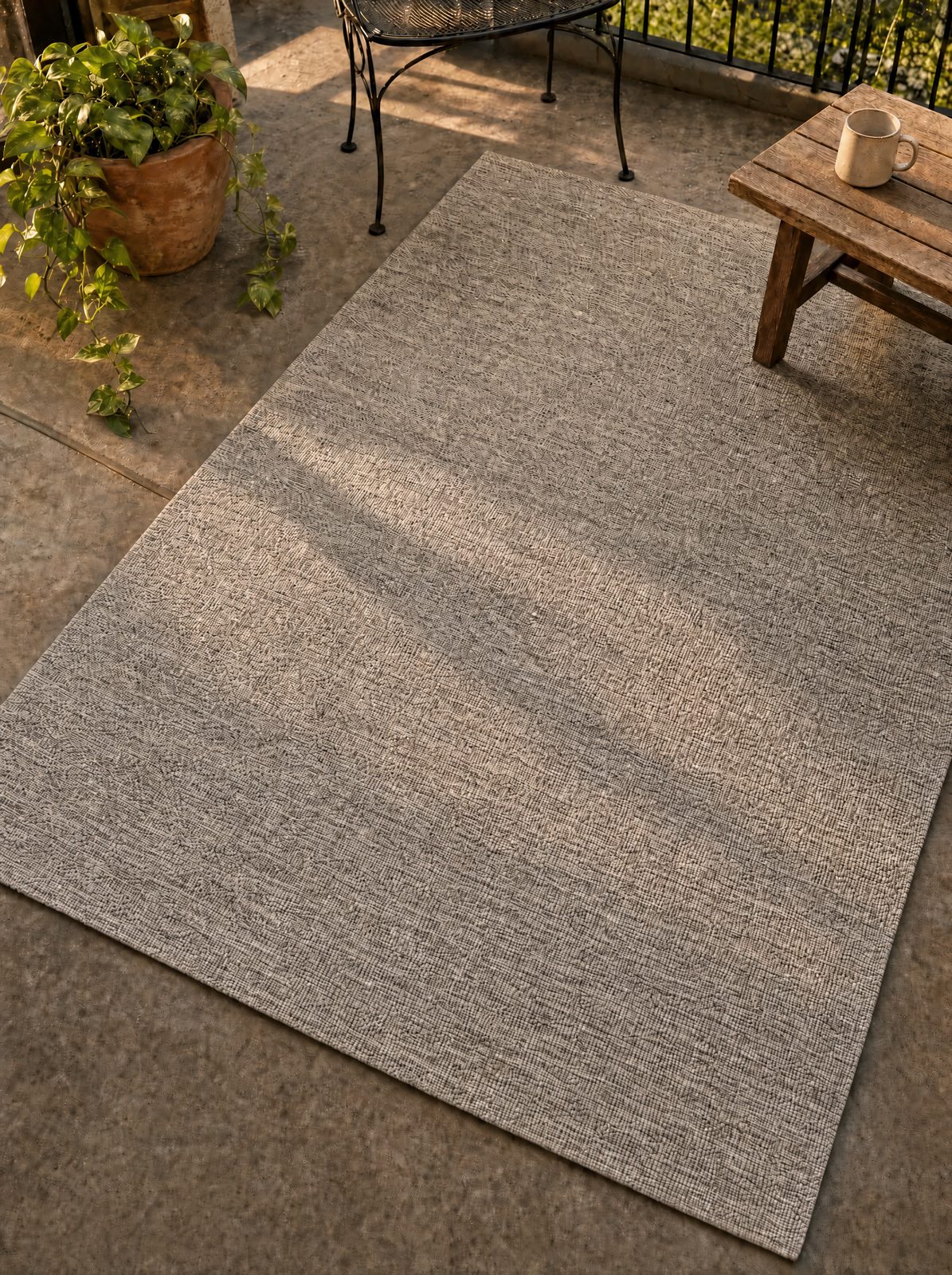
Heathering is the cheat code. Instead of one flat color, a heathered rug is woven from fibers in several closely-related tones — warm and cool beiges blended through the weave. Up close you see the variation; from across the patio it reads as warmth and richness, not plastic.
The Unique Loom Casual Transitional heathered flatweave is the clearest example in our lineup. It’s UV-resistant polypropylene at $88.99 — but the heathered surface is what earns it 4.5 stars across 7,364 reviews, with the most-repeated praise being some version of “looks way more expensive than it is.” At 5x8 it hits the small-patio sweet spot without resorting to a busy pattern, which is the whole point: a solid that doesn’t read as cheap.
Styled lifestyle image. Click through to view current Amazon product photos and pricing.
Unique Loom Collection Casual Transitional Solid Heathered Indoor/Outdoor Flatweave Area Rug (5' 1" x 8' Rectangle, Beige/Ivory)
Best for: Small patios that want the 5×7 sweet spot without pattern
$88.99
View on AmazonIs a Pattern a Safer Bet Than a Solid?
If you want the most forgiving choice, yes. A pattern gives the eye structure and shadow to read, which masks the flat-fiber sheen that exposes cheap solids entirely.
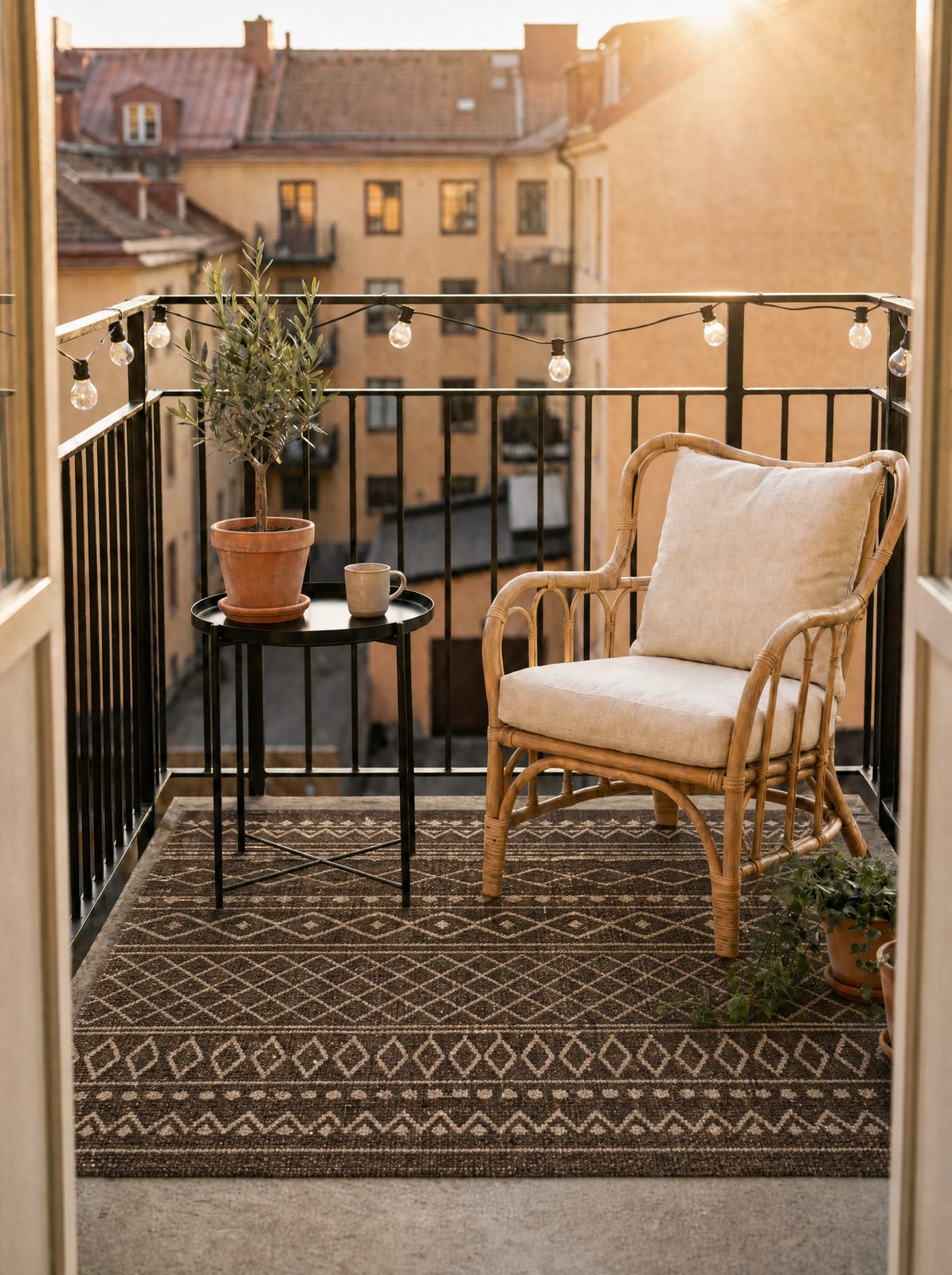
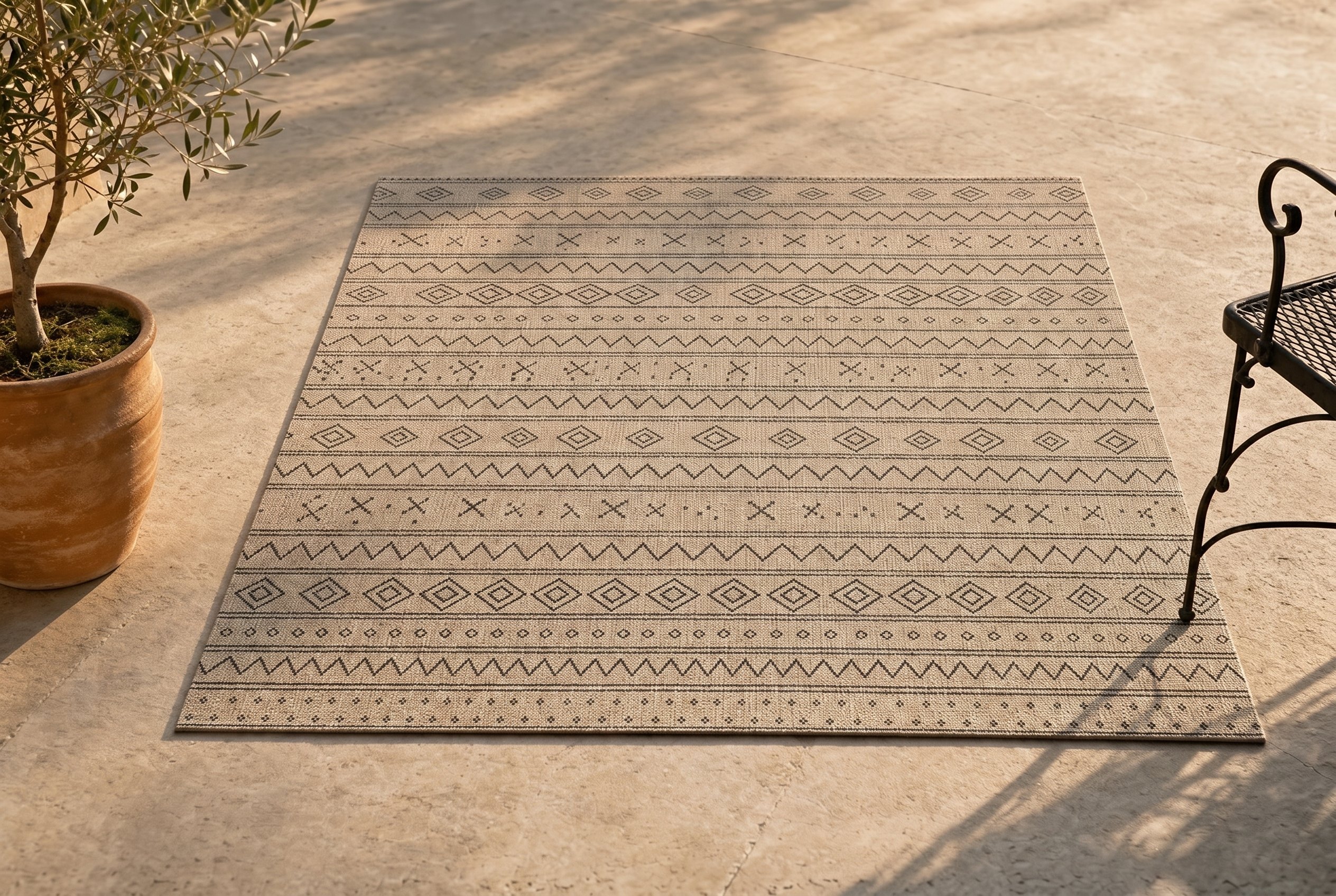
The JONATHAN Y Moroccan geometric is the proof: a low-contrast diamond pattern at $70 that reads designer, and the highest-rated rug we stock at 4.7 stars across 5,857 reviews. It’s indoor/outdoor synthetic flatweave, so it shrugs off weather while the pattern does the visual heavy lifting. If you’ve been burned by a flat solid before, a soft geometric like this is the safest anti-plastic pick — it’s hard to make a pattern look like a mat.
Styled lifestyle image. Click through to view current Amazon product photos and pricing.
JONATHAN Y Moroccan Geometric Indoor/Outdoor Area Rug 5' x 8', Natural/Black, Ourika Textured Weave
Best for: Designer look at a non-designer price
$70.00
View on AmazonCan a Budget Rug Avoid the Plastic Look?
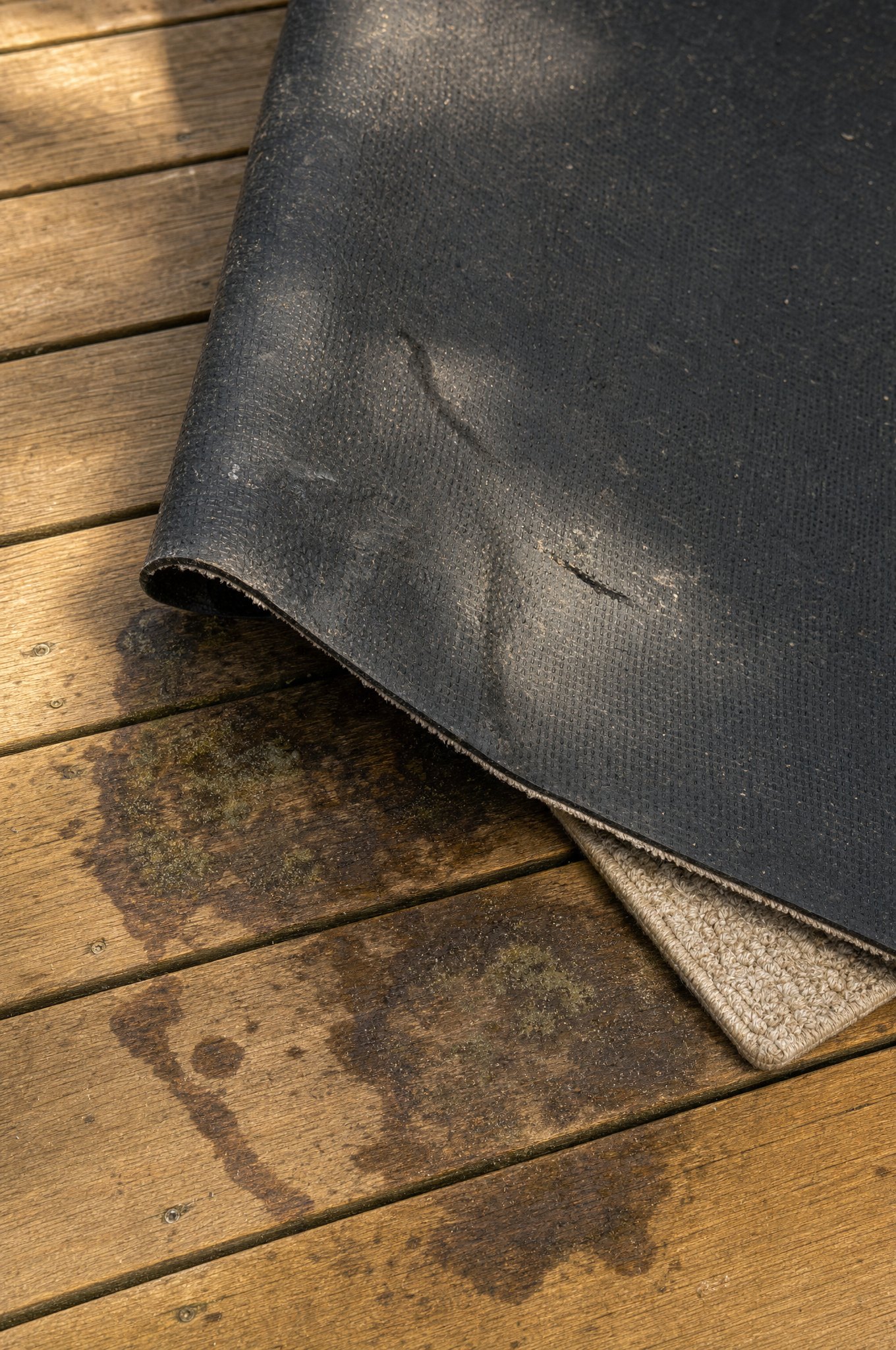
It can — texture matters more than dollars. The Fab Habitat reversible flatweave is woven from recycled plastic at $46.99, and it dodges the cheap look through weave structure rather than heathering: the flatweave texture and reversible two-tone construction give it more surface interest than a molded budget mat. At 4.5 stars across 11,000 reviews, it’s the value proof that “looks cheap” is a design problem, not a price problem.
The trap to avoid in the budget tier is the bargain-bin flat solid — the $25 one-tone mat that photographs fine and arrives looking exactly like what it cost. Spend the same money on a textured or patterned weave instead.
Styled lifestyle image. Click through to view current Amazon product photos and pricing.
Fab Habitat Outdoor Rug - Waterproof, Fade Resistant, Crease-Free - Premium Recycled Plastic - Neutral Ombre - Porch, Deck, Balcony, Mudroom, Laundry Room, Patio - Big Sur - Ash - 3 x 5 ft
Best for: Renters whose first outdoor rug needs to move with them
$46.99
View on AmazonHow Do You Spot the Plastic Look Before You Buy?
You can catch most offenders from the listing:
Read the description for texture words. Heathered, tonal, textured, two-tone, hand-woven — these signal surface depth. A listing that only says “solid color, easy clean” is a yellow flag.
Zoom the product photo all the way in. Look at the weave. Real tonal variation across the fibers is good; a perfectly uniform field of one color will read flat in person.
Scan reviews for the tells. “Looks more expensive than it is” and “great texture” are green lights. “Looks like a doormat,” “felt like plastic,” and “shinier than expected” are the exact failure you’re trying to avoid.
Be suspicious of one studio shot. Rugs photographed in a single perfect overhead frame often hide a flat surface. Listings with real-room photos at an angle are showing you the texture because it holds up.
If you do all four and still aren’t sure, default to a heathered weave or a low-contrast pattern — both are nearly impossible to make look cheap, which is why every pick on this page is one or the other.
Does Color Choice Change the Plastic-Mat Effect?
It does, and it’s the easiest lever to pull. Some colors hide the cheap look; others put a spotlight on it.
Bright, cool colors expose it. A stark white or cool gray solid shows every bit of fiber sheen and reads most like plastic, because there’s no warmth to soften the reflection. These are the riskiest solids you can buy.
Warm, muted tones forgive it. Sand, taupe, and warm greige scatter and absorb light more gently, so even a modest weave reads as cozy rather than cheap. This is why the warm-natural picks on this page survive scrutiny that a bright-white version of the same rug wouldn’t.
Low-contrast patterns erase it. A tonal geometric in close shades — like the JONATHAN Y — gives the eye texture without the busy look, and it’s nearly impossible to make read as a mat. The pattern does the anti-plastic work for you.
If you’re set on a solid, choose a warm muted tone over a bright cool one and you’ve already won half the battle. Color accuracy plays into this too: a rug that arrives the warm color it looked online holds the cozy read, while one that shifts cool on arrival tips right back toward plastic. Texture and color are the same fight.
Does Size or Placement Change How Cheap a Rug Looks?
Surprisingly, yes — even a good rug can read cheap if it’s the wrong size for the space. A rug that’s too small for the furniture floats like an afterthought, which makes the whole setup look unconsidered no matter how nice the weave is. Front furniture legs sitting on the rug is what makes a patio read intentional; furniture marooned around a tiny rug reads like a bath mat dropped on concrete.
So before you blame the rug, check the size against your furniture. The fix for “this looks cheap” is sometimes a bigger version of the same rug, not a different one. A heathered 5x8 that anchors the seating beats a heathered 3x5 that hovers in the middle of it — same fiber, completely different read. Texture gets you most of the way; correct scale finishes the job.
The One-Line Rule
Buy the texture, not the color. A flat solid in any price bracket risks the plastic-mat look; a heathered weave or a soft pattern reads intentional even on a budget. Match the surface to the standard you want, and the price mostly takes care of itself.
Related reading
- Which boho outdoor patio rugs under $80 don’t look cheap?
- How to pick outdoor patio rugs that actually look pulled together
- Outdoor patio rugs for tiny spaces (that actually fit)
- Best Outdoor Patio Rugs Under $80: The Five Reviewers Keep Coming Back To
- Durable Outdoor Rugs: Which Ones Last More Than One Season?
Shop the Look
Styled lifestyle image. Click through to view current Amazon product photos and pricing.
Unique Loom Collection Casual Transitional Solid Heathered Indoor/Outdoor Flatweave Area Rug (5' 1" x 8' Rectangle, Beige/Ivory)
Best for: Small patios that want the 5×7 sweet spot without pattern
$88.99
View on Amazon Styled lifestyle image. Click through to view current Amazon product photos and pricing.
JONATHAN Y Moroccan Geometric Indoor/Outdoor Area Rug 5' x 8', Natural/Black, Ourika Textured Weave
Best for: Designer look at a non-designer price
$70.00
View on Amazon Styled lifestyle image. Click through to view current Amazon product photos and pricing.
Fab Habitat Outdoor Rug - Waterproof, Fade Resistant, Crease-Free - Premium Recycled Plastic - Neutral Ombre - Porch, Deck, Balcony, Mudroom, Laundry Room, Patio - Big Sur - Ash - 3 x 5 ft
Best for: Renters whose first outdoor rug needs to move with them
$46.99
View on Amazon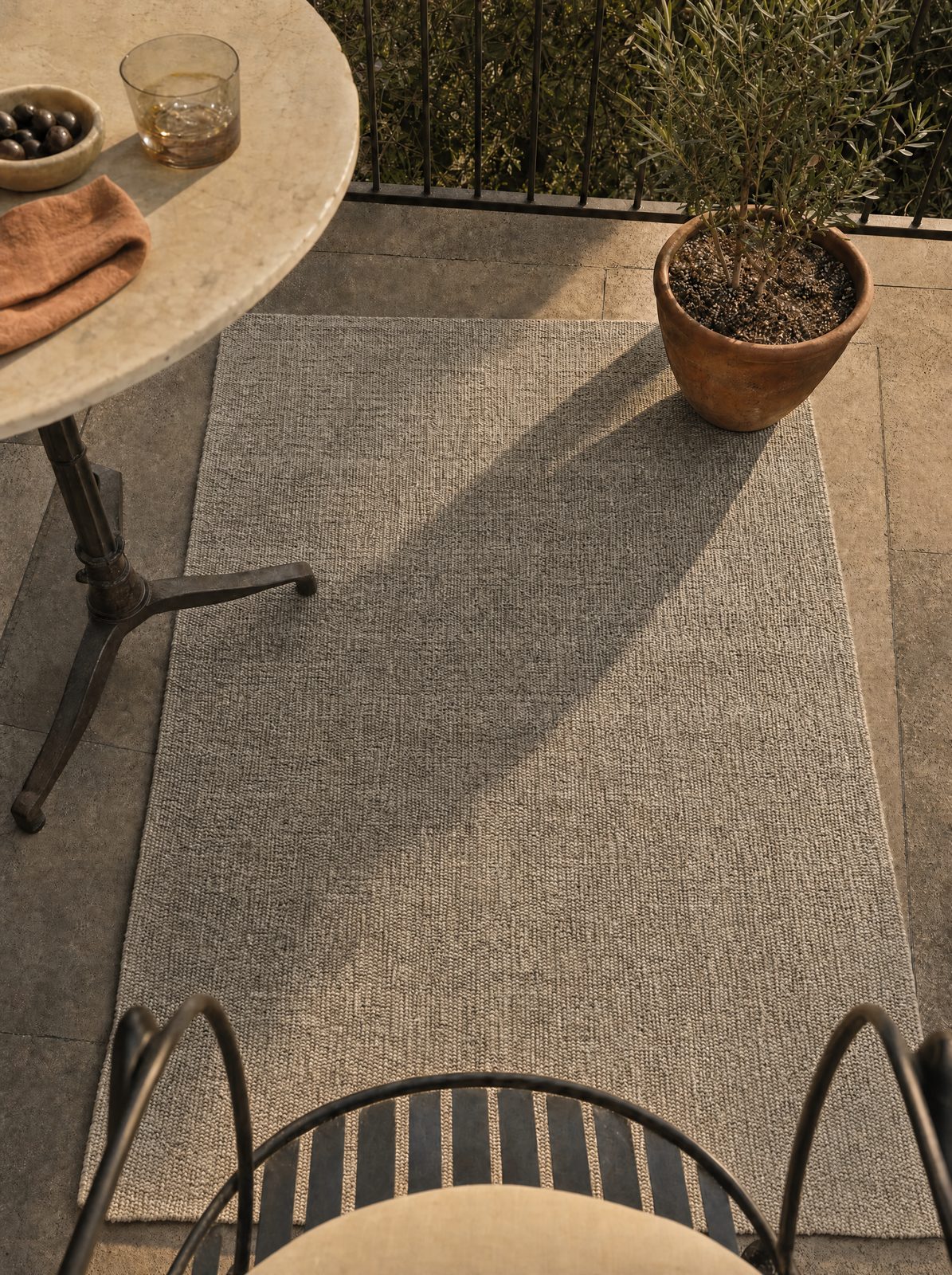
Styled lifestyle image. Click through to view current Amazon product photos and pricing.
Unique Loom Collection Casual Transitional Solid Heathered Indoor/Outdoor Flatweave Area Rug (4' 1" x 6' 1" Rectangle, Beige/Ivory)
Best for: Bistro setups and single-chair apartment balconies
$48.59
View on AmazonGot questions?
Why does my outdoor rug look like a plastic mat?
Almost always one reason: it's a flat, single-tone solid with no surface texture. Cheap polypropylene woven in one uniform color reflects light evenly, which reads to the eye as plastic. The fix isn't spending more — it's choosing a heathered or patterned weave, where mixed fiber tones break up the light and give the surface depth instead of that one-note sheen.
What is a heathered outdoor rug?
Heathered means the rug is woven from fibers in several closely-related tones — warm and cool beiges mixed together rather than one flat color. Up close you see subtle variation across the weave; from a few feet away it reads as warmth and depth. It's the single biggest reason one solid rug looks intentional and another looks like a doormat, even at the same price.
Do more expensive outdoor rugs always look better?
No. Price and the cheap look are barely related. A $40 patterned rug can read as designer while a $120 flat solid reads as plastic. What actually drives the look is texture, pattern, and color accuracy, not the number on the tag. The Unique Loom heathered flatweave ($88.99) outperforms many rugs twice its price specifically because of the tonal weave.
Are flatweave outdoor rugs cheap-looking?
Not inherently — flatweave is a construction, not a quality level. A flatweave with heathering or a real pattern looks crisp and modern. A flatweave in one dead-flat color is the one that looks like a plastic mat. So judge the surface (tonal depth, pattern) rather than the word flatweave on the listing.
How do I pick an outdoor rug that doesn't look cheap online?
Three checks: look for the words heathered, tonal, or textured in the description; zoom the product photo to see if the weave has color variation or is one flat tone; and read reviews for the phrase looks more expensive than it is. If the listing only shows one perfect studio shot and the color looks uniform, assume it'll read flatter in person.
Does a patterned rug hide the plastic look better than a solid?
Usually yes. A pattern — like the JONATHAN Y Moroccan geometric — gives the eye structure and shadow to read, which masks the flat-fiber sheen that exposes cheap solids. If you love the clean look of a solid, go heathered; if you want the safest bet against the plastic-mat effect, a low-contrast geometric is the most forgiving choice.
Written by KORP
Covering home decor for people who actually care how their space looks — outdoor patios, small rooms, and the details that make it feel intentional.