Quick Picks: Top 3 in 30 Seconds
Don't have time to read the full post? Start here.
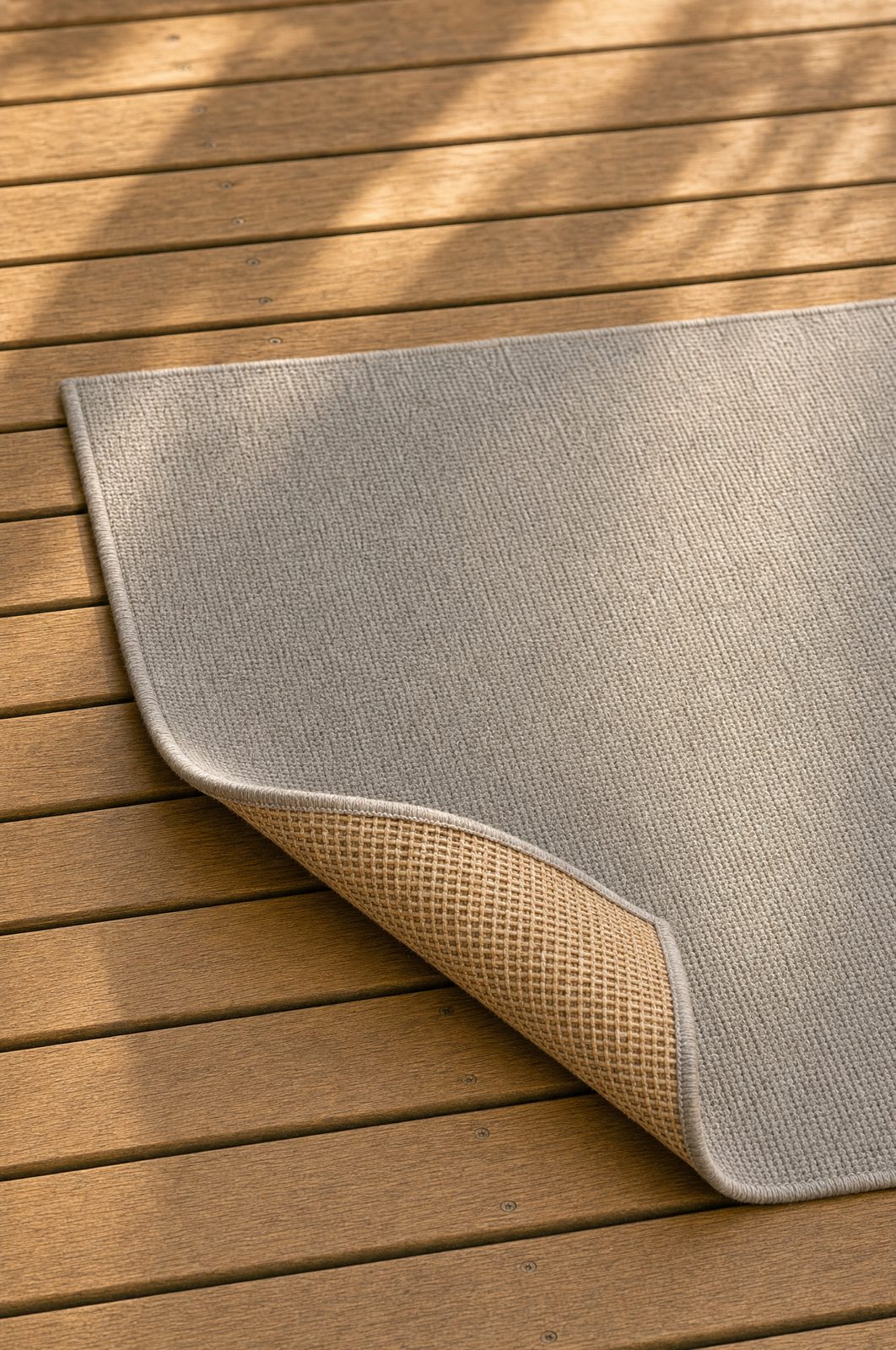 Editor's Pick
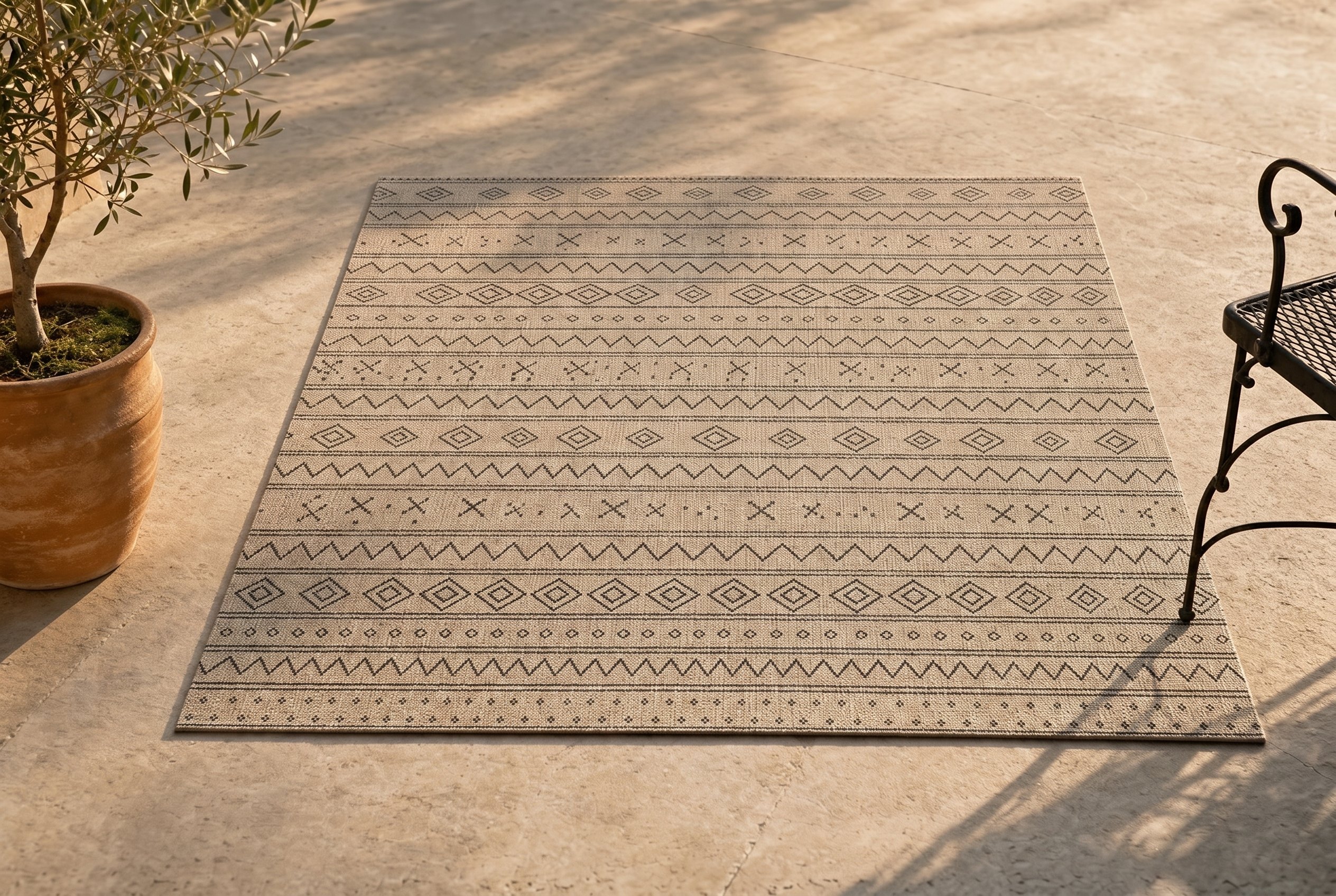
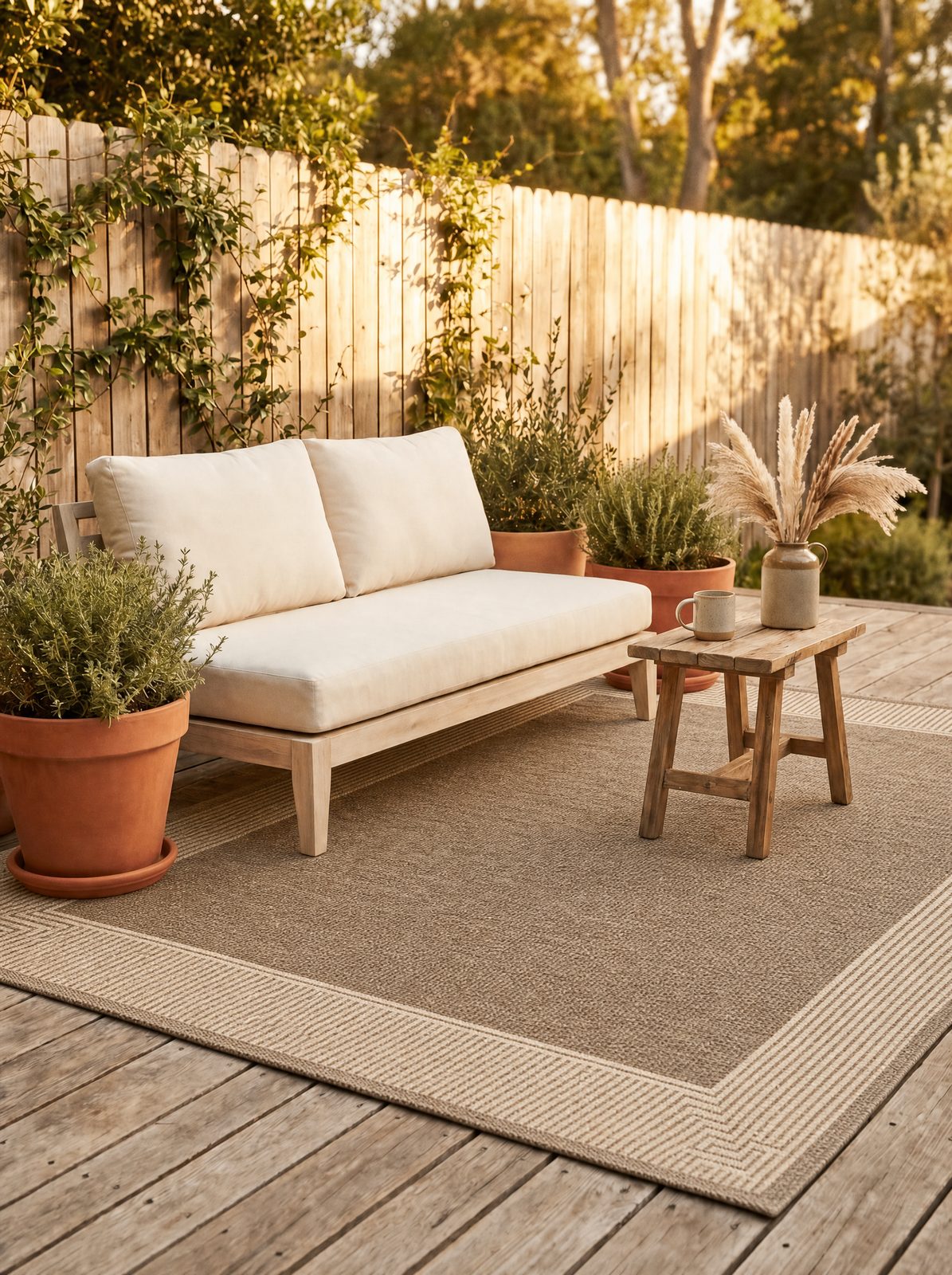
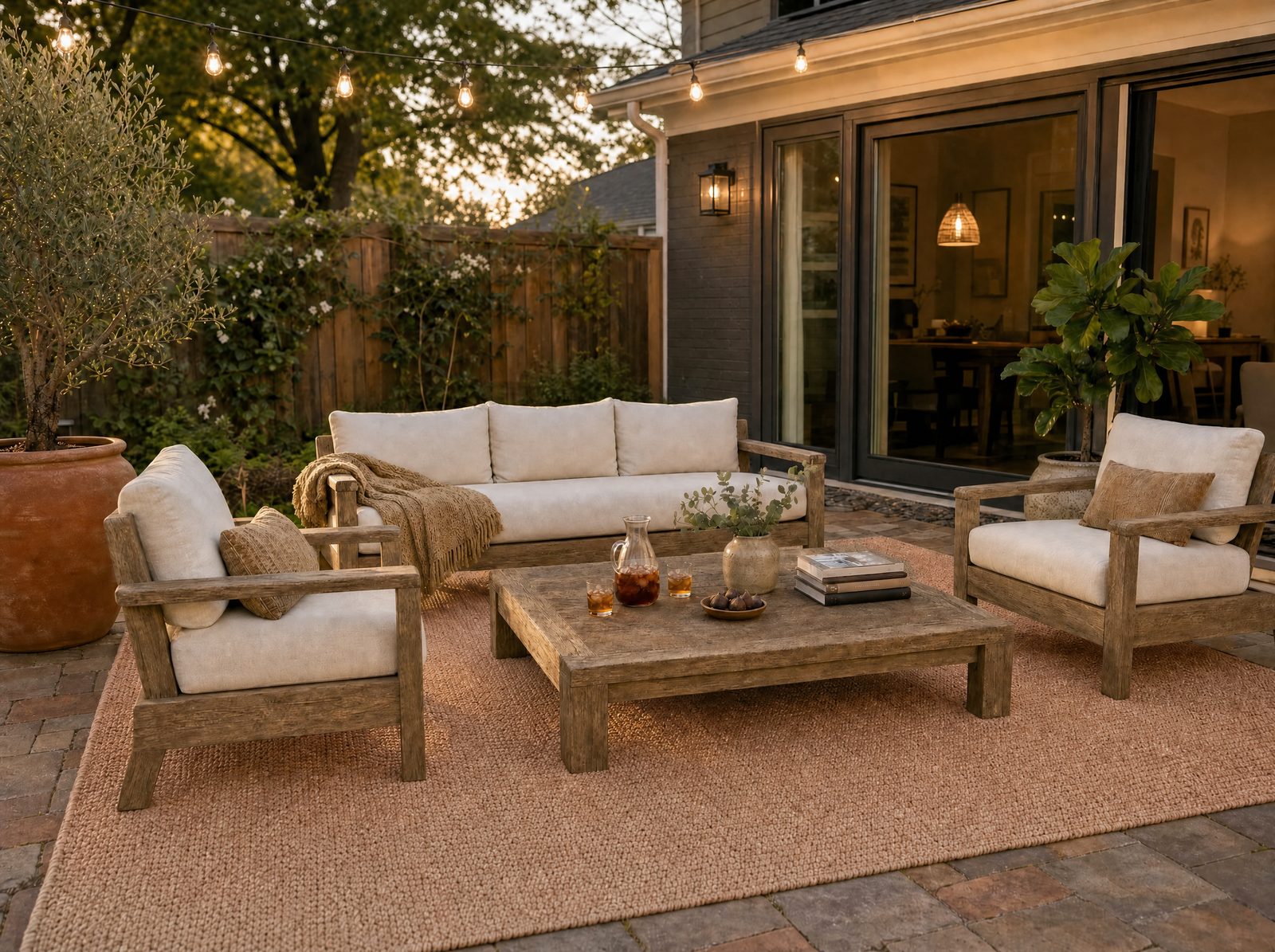
 Styled lifestyle image. Click through to view current Amazon product photos and pricing.
Fab Habitat Outdoor Rug - Waterproof, Fade Resistant, Crease-Free - Premium Recycled Plastic - Neutral Ombre - Porch, Deck, Balcony, Mudroom, Laundry Room, Patio - Big Sur - Ash - 3 x 5 ft
Best for: Renters whose first outdoor rug needs to move with them
$46.99
View on Amazon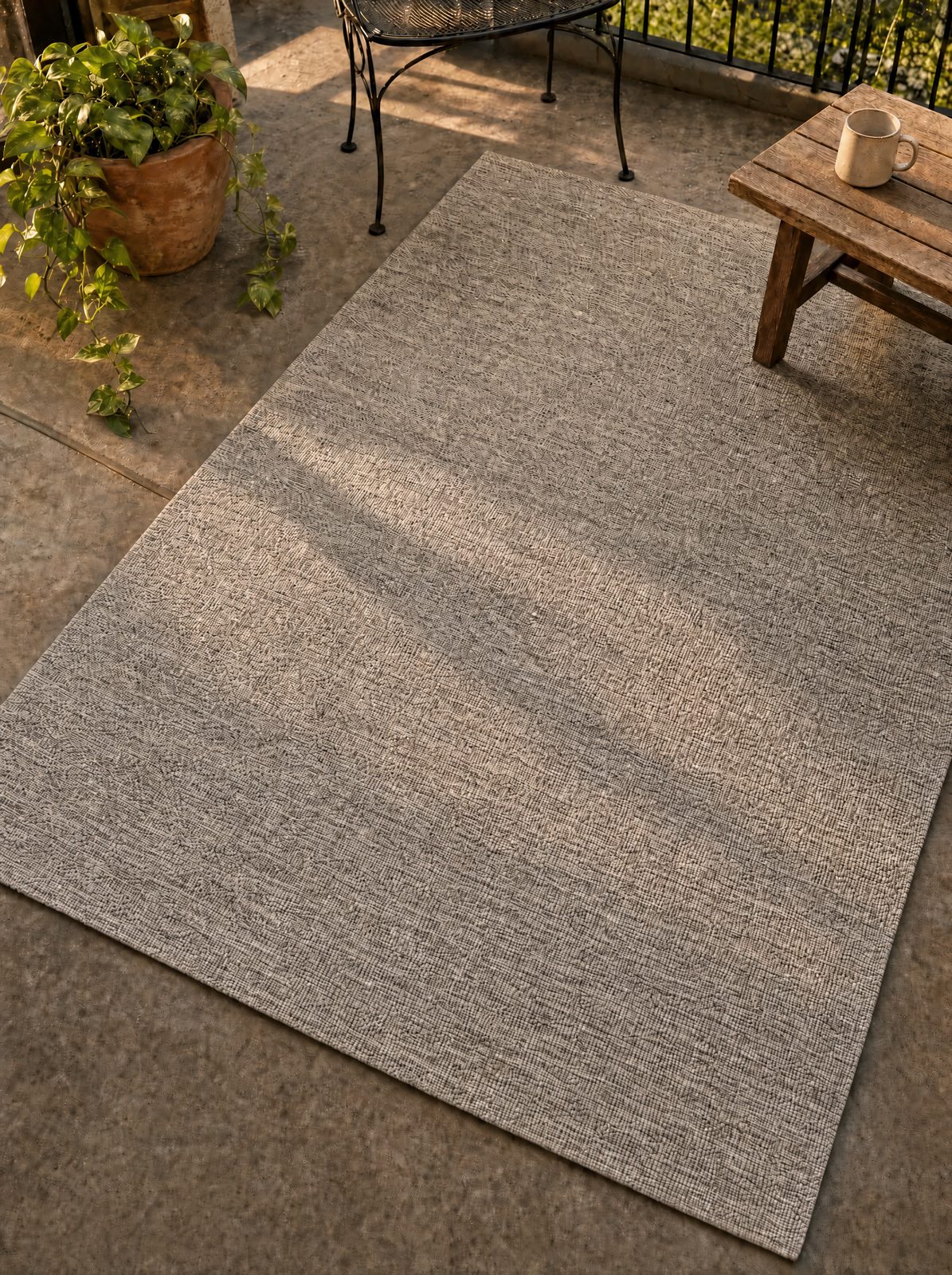
Styled lifestyle image. Click through to view current Amazon product photos and pricing.
Unique Loom Collection Casual Transitional Solid Heathered Indoor/Outdoor Flatweave Area Rug (5' 1" x 8' Rectangle, Beige/Ivory)
Best for: Small patios that want the 5×7 sweet spot without pattern
$88.99
View on Amazon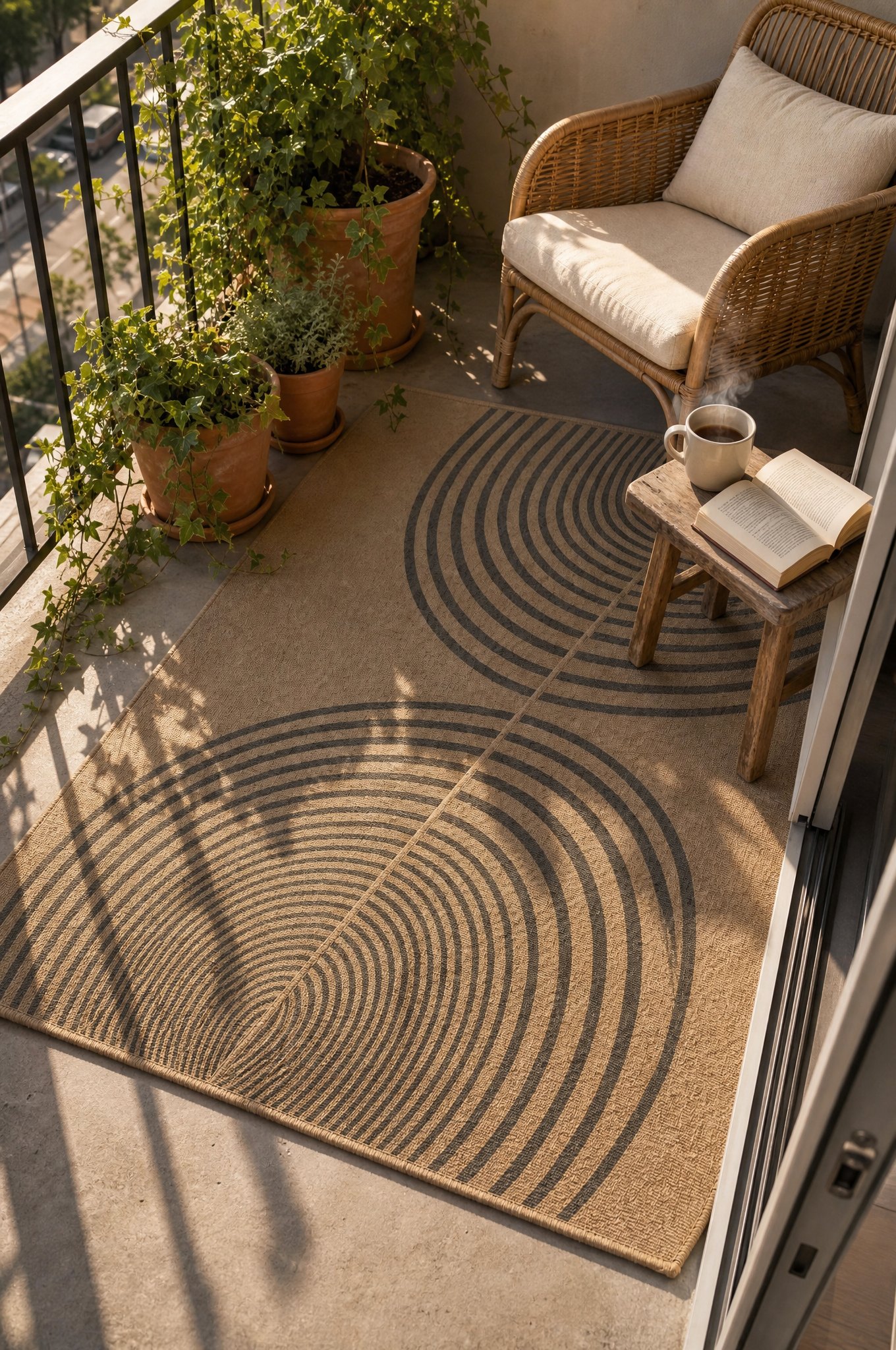
Styled lifestyle image. Click through to view current Amazon product photos and pricing.
Rugalia Easy Jute 5x7 Outdoor Patio Rug, Washable Modern Boho Rugs for Living Room, Non-Slip Farmhouse Rainbow Outdoor Mat Neutral Abstract Floor Carpet for Patio Dining Room Backyard
Best for: Renters with wood decks who need a moisture-safe rug
$72.99
View on AmazonWill an outdoor rug damage your wood deck? Yes, it can. I ruined my first wood deck with an outdoor rug, and it cost me a security deposit I couldn’t afford to lose. The rug stayed damp for days after rain, and by week three, the planks underneath had started to warp and turn a mottled gray-green. The culprit wasn’t the rug itself. It was the rubber backing on untreated wood, the exact combination that traps moisture and breeds mildew underneath. When I moved out, the landlord’s inspector photographed the staining and the soft spots, and I watched $400 disappear from my deposit while she explained “water damage from improper outdoor coverings.” I was renting and broke and furious at myself for not knowing better. Running through the 5 checks below before you buy means you can confidently pick a rug that won’t damage your deck or cost you your security deposit.
TL;DR: An outdoor rug can rot a wood deck if it traps moisture underneath. Before you buy, check for a breathable weave, no rubber backing, synthetic fibers, dye-stable construction, and a weight you can lift to dry after rain. Pass all five, and the rug protects your deck instead of quietly destroying it.
That was four apartments ago. Since then, I’ve learned the five things that actually matter before you roll out an outdoor rug on a wood deck or balcony. These aren’t complicated checks. They take maybe two minutes while you’re reading product reviews. But they’re the difference between a rug that sits flat and dry and one that becomes a slow-motion leak.
Here’s what to look for:
- Breathable, quick-dry weave (tight closed weaves pool water, open weaves let it drain)
- No rubber underside (this is the one most people skip, and it’s why decks warp)
- Synthetic over natural fiber on wood (natural absorbs, synthetic drains)
- Non-dye-transfer backing (some colors bleed onto light wood permanently)
- Liftable when wet for drying airflow (heavy rugs trap moisture for days)
Check 1: Does the rug have a breathable, quick-dry weave?
A breathable weave is literally the difference between a rug that protects your deck and one that rots it out from underneath. Wood needs to dry after rain or humidity spikes, and when water gets trapped between the rug backing and the deck surface, you’re looking at mildew, soft spots in the finish, and eventually structural damage that your landlord will notice on the move-out inspection.
When you’re checking product descriptions, look for specific language that signals airflow: “open-weave polypropylene”, “flatweave construction”, “mesh backing”, or anything that says “ventilated” or “breathable”. These aren’t just marketing words. They’re telling you the rug lets water pass through instead of pooling underneath. Nourison, JONATHAN Y, and MontVoo all list their backing construction pretty clearly, and that’s worth reading before you buy.
The trap is cheap rugs that photograph well online. They often have solid plastic or rubber backing that looks protective in the product shot but actually creates a seal. Water pools, sits for days, and your deck stays damp. I learned this the hard way on my first patio rug. It looked fine, but after a rain, the wood underneath stayed wet for almost a week.
Here’s a test you can run: put the rug down after rain and lift one corner after a few hours. The deck underneath should be drying out, not still slick and wet. If it’s wet, the backing isn’t breathable enough, and you’re risking mold growth and finish damage. Polypropylene with an open weave or mesh base typically passes this test. Closed rubber or plastic backing usually fails it.
Check product photos closely, too. If you can’t see any texture or gaps in the backing, assume it’s a moisture trap. Good breathable rugs show visible weave structure when you look at the underside.
Check 2: Is there rubber on the underside?
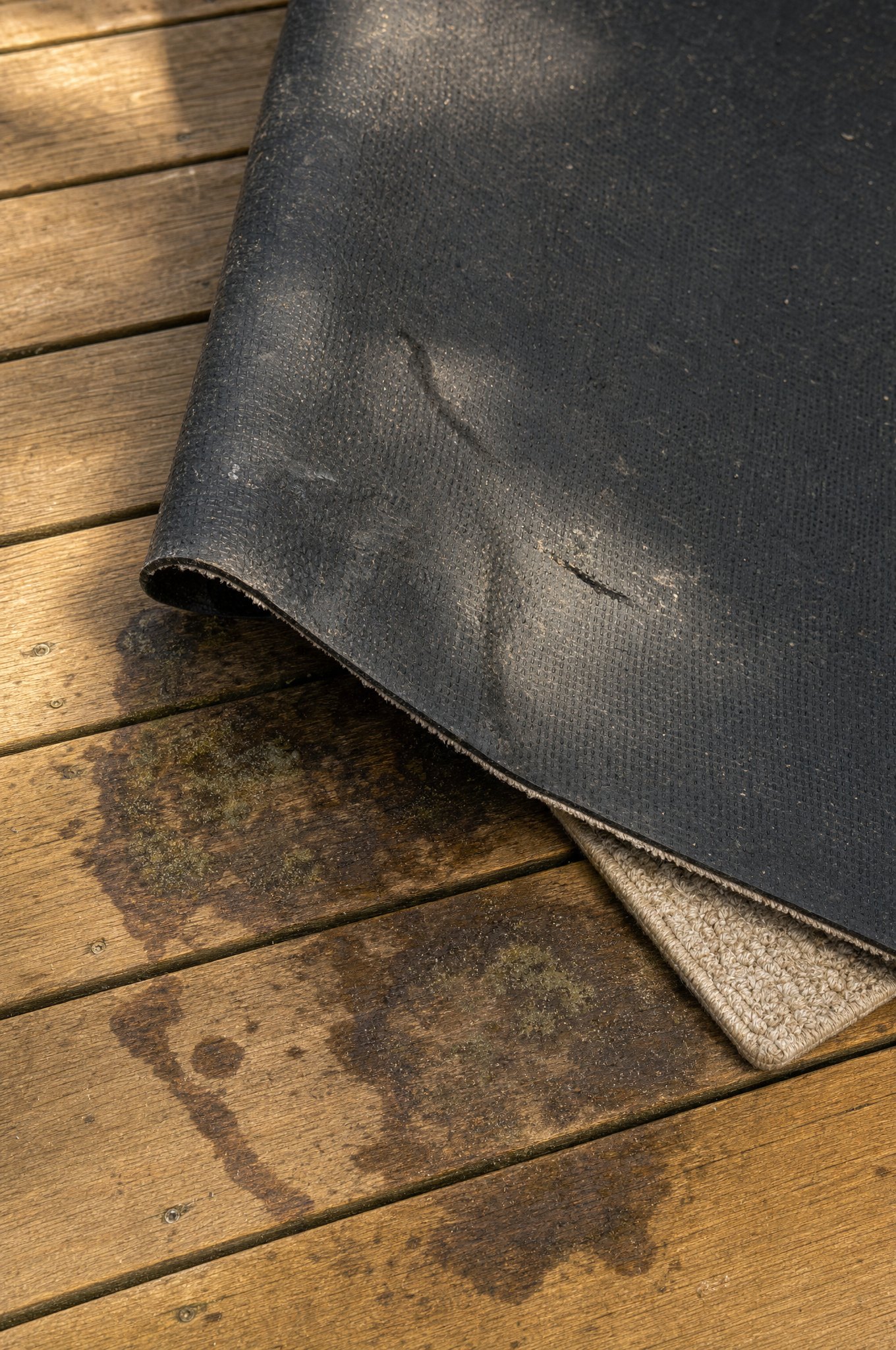
Rubber backing is the silent deck killer most people don’t think about until it’s too late. This is the check most people skip, and it’s why decks warp. Here’s what actually happens: rubber traps moisture directly against the wood underneath. Over days or weeks, that moisture soaks into the planks. The wood swells. Then the planks warp, sometimes split, and sometimes the finish lifts right off. You end up with a wavy deck that looks like it got rained on for a month straight, except the damage is permanent.
The mechanism is simple physics. Wood breathes and moves with humidity. A breathable rug lets air circulate underneath, so moisture evaporates naturally. Rubber blocks that airflow completely. Water pools under there, has nowhere to go, and the wood absorbs it like a sponge. (Apartment Therapy covers this and other deck-damaging habits in detail.) Repeat that cycle through a few humid summer weeks and you’ve got structural damage.
The tricky part is that brands hide rubber backing behind marketing language. Look for terms like “non-slip”, “grippy”, “secured backing”, or “grips” in the product description. Those often mean rubber. Instead, search for jute-backed, no-backing, or open-weave synthetic constructions that let air move through. GENIMO rugs and Fab Habitat options explicitly list their backing material, which makes them reliable picks if you’re scanning quickly.
Even if the rug itself has breathable construction, avoid placing rubber rug pads directly on wood decks. If you need a pad for grip, which is fair on a balcony, get a breathable outdoor rug pad specifically designed for deck use. The difference between a standard pad and a deck-safe one is literal airflow engineering.
Here’s the renter-specific reality: deck warping is the kind of damage landlords notice at move-out inspections. They’ll photograph it, compare it to the lease photos, and charge you for deck repair or refinishing. That bill runs $500 to $2,000 depending on severity, and most security deposits don’t come close to covering it. A $60 rug with rubber backing that warps your deck just cost you the deposit AND a separate damage invoice you’ll still owe after move-out. This single check is the highest-leverage decision for protecting your deposit and avoiding a charge that follows you to your next rental application.
Check 3: Synthetic or natural fiber on wood decks?
Synthetic materials are the smarter call for wood decks, even though I get why you’d want jute. Here’s the honest tradeoff: natural fiber feels incredible underfoot and reads warm-minimalist in photos. Jute, sisal, seagrass, all of it has that texture and warmth that makes a space feel intentional. But natural fiber acts like a sponge. When water sits underneath it against your wood deck, mildew grows fast, and you’ll end up with dark stains or soft spots in the wood that your landlord notices.
Polypropylene and recycled plastic flatweaves have gotten genuinely good at mimicking that natural look. GENIMO’s flatweave ($40-60) comes in warm sand and heathered taupe that don’t scream synthetic. Fab Habitat’s recycled plastic line uses certified recycled materials and looks more woven than plastic. Nourison’s outdoor options include flatweaves that read natural even though they’re poly. The key is picking heathered or solid tones over anything shiny or neon.
One real exception: if your deck has a solid roof or deep overhang above it, jute becomes an option again. Rain exposure is the danger, not the material itself. Covered patios in dry climates don’t get the sustained wet that triggers mildew. But if your balcony or patio sees open sky, synthetic is the move.
Quick decision rule. Open-air wood deck, go synthetic. Covered deck or balcony with overhang, jute is back in play. Your aesthetic won’t suffer with the right synthetic pick. You’re still pulling off the boho-minimal look. Your landlord’s security deposit just survives the move.
Check 4: Will the backing transfer dye onto your deck?
Non-dye-transfer backing is the difference between moving out with your full deposit intact and finding a faint colored shadow permanently stained into your landlord’s wood deck. Here’s what actually happens. When a wet rug with dyed backing sits on wood for weeks or months, moisture pulls the dye through the fibers and into the grain. You don’t see it happening. Then move-out day arrives, you roll up the rug, and there it is, a ghost outline where the backing color has bled into the wood. That’s not coming out. I’ve seen renters lose deposits over this.
Look for rugs with neutral or undyed backings, usually labeled as tan, cream, or white. Better brands like Fab Habitat and JONATHAN Y list their backing material and dye process clearly on the product page, which is a good sign even if there’s no formal certification. When you’re reading reviews on Amazon, skip the generic “great rug” comments and hunt for the specific ones. Search for “no staining,” “removed without marks,” or “deck looked perfect after.” Those reviews tell you the backing has survived real-world moisture.
The biggest red flag: bright saturated colors on the backing side, especially reds, blues, or dark greens. Those dyes are loosely bound and transfer easily. Neutrals and grays are safer bets.
Here’s the move that actually works. Before you commit the full rug to your deck, wet a small corner and press it against a hidden spot of the deck, maybe under a planter or behind a chair. Leave it for 24 hours. Lift it and look at the wood. No color transfer means you’re safe. Any discoloration means return the rug and try another brand. It costs nothing except 24 hours, and it protects your entire deposit before the rug ever sees a full rainy week on your deck.
Check 5: Is the rug liftable when wet for drying airflow?
A rug that weighs 40 pounds looks great until you realize you can’t actually lift it after it rains, and then moisture gets trapped underneath and suddenly your deck is developing dark spots. This is the check most people skip because they’re focused on how the rug looks in the product photo, not what happens when you have to maintain it.
The goal is simple. After rain or a humid stretch, you lift the rug, prop it against a railing or fence for a few hours, and let both the rug and the deck underneath air-dry completely. That airflow is what stops mildew and prevents water from pooling on your deck. But this only works if you can actually lift the thing by yourself.
Weight ranges by size: under 15 pounds for a 3×5, under 20 pounds for a 5×7, under 30 pounds for a 5×8. GENIMO’s 5×7 lists at around 18 pounds, which folds and carries one-handed. That’s the sweet spot. Anything heavier and the rug becomes a permanent fixture, which kills the airflow strategy that protects the deck.
Synthetic flatweaves made from polypropylene or recycled plastic tend to be lighter than thick natural fiber options at the same size. Check the product specs before you order. If the weight isn’t listed, that’s a red flag, the brand probably knows it’s heavy.
One more thing if you live somewhere with real winters: roll the rug up and store it indoors during the off-season. Leaving it on the deck through freeze-thaw cycles damages both the rug fibers and your deck. Your future self will appreciate not dealing with a brittle, cracked rug come spring, and your deck will appreciate the months of breathing room.
3 deck-safe outdoor rugs that pass every check
The difference between a rug that stains your deck and one that doesn’t comes down to five specific material choices, and honestly, most cheap outdoor rugs fail at least three of them.
Here’s what actually matters: your rug needs a breathable weave so water flows through instead of pooling underneath. It needs to be synthetic (polypropylene or recycled plastic) rather than natural fiber, since jute and cotton absorb moisture like a sponge. The backing can’t be rubber or latex, because that traps water against the wood. The dyes and any natural fiber tannins need to be colorfast and non-transferring, so wet contact doesn’t bleed color onto your deck. And it has to be light enough to lift up and prop against a wall when it gets soaked, so air can dry the underside.
These three rugs pass all five. They’re the picks I’d recommend to a renter or a wood-deck owner who doesn’t want to gamble with a deposit or a refinishing bill.
Is the Fab Habitat Big Sur in Ash a good lightweight pick?
Recycled plastic fibers with a tight, breathable weave, zero rubber backing, and light enough to lift and lean against your patio wall for drying. The ash colorway reads warm and intentional, not dingy. Under $50. If portability for moves is your priority, our renter-proof outdoor rugs guide covers Fab Habitat in deeper detail.
Styled lifestyle image. Click through to view current Amazon product photos and pricing.
Fab Habitat Outdoor Rug - Waterproof, Fade Resistant, Crease-Free - Premium Recycled Plastic - Neutral Ombre - Porch, Deck, Balcony, Mudroom, Laundry Room, Patio - Big Sur - Ash - 3 x 5 ft
Best for: Renters whose first outdoor rug needs to move with them
$46.99
View on AmazonIs the Unique Loom Heathered Beige the best value?
Polypropylene flatweave that breathes, no rubber underside, and a neutral heathered tone that works with almost any boho setup. Warm enough to not look like a camping mat, durable enough to survive multiple seasons outdoors. Around $87.
Styled lifestyle image. Click through to view current Amazon product photos and pricing.
Unique Loom Collection Casual Transitional Solid Heathered Indoor/Outdoor Flatweave Area Rug (5' 1" x 8' Rectangle, Beige/Ivory)
Best for: Small patios that want the 5×7 sweet spot without pattern
$88.99
View on AmazonIs the Rugalia Easy Jute 5×7 worth it for covered patios?
Natural jute only works on covered decks or in dry climates because the fibers do absorb moisture, so you’ll need protected patio space. That said, the weave is tight and breathable, there’s no rubber backing, and it lifts easily for air drying. Around $73.
Styled lifestyle image. Click through to view current Amazon product photos and pricing.
Rugalia Easy Jute 5x7 Outdoor Patio Rug, Washable Modern Boho Rugs for Living Room, Non-Slip Farmhouse Rainbow Outdoor Mat Neutral Abstract Floor Carpet for Patio Dining Room Backyard
Best for: Renters with wood decks who need a moisture-safe rug
$72.99
View on AmazonWhat’s the rug that survived your deck the longest? Tell me below.
Frequently asked questions
Can I use a jute or sisal rug on my wood deck?
Skip natural fibers like jute and sisal on open-air wood decks. They absorb water like a sponge, stay wet for days, and the fibers can transfer tannins straight into your wood, which is basically a permanent stain your landlord will notice at move-out. Stick to polypropylene or recycled-plastic outdoor rugs with breathable backing instead. If your deck has a solid overhang or you’re in a genuinely dry climate, jute is back on the table, but run your hand underneath after rain to confirm water’s draining through and not pooling.
How often should I lift my rug to dry it after rain?
After any heavy rain or humid stretch, lift the rug and prop it against a railing or wall for a few hours so air can dry both sides. If the rug stays wet underneath for more than 24 hours without lifting, that’s when mildew starts. The real win is buying a rug light enough to lift one-handed in the first place, so the routine takes 30 seconds instead of being a project.
What if I already have a rubber-backed rug, should I throw it out or can I salvage the situation?
Honest answer: there’s no real salvage. Rubber backing traps moisture against the wood no matter what you put underneath, so you’re either replacing the rug or committing to lifting it every single time it rains so the deck can dry. If the rug is already showing the dark line on the deck underneath, stop using it on wood entirely. Move it to a concrete patio or balcony, or replace it with a breathable-backed option from the picks above.
Will any outdoor rug eventually stain my deck, even one that passes all 5 checks?
Most synthetic rugs with polypropylene fibers and non-dye-transfer backing won’t stain if you’re doing the basics right. But if your rug stays soaking wet in direct sun for weeks without airflow, even the best one can fade your deck’s finish over time through sheer moisture exposure. Pull the rug up and move or rotate it every 2-3 months so no single spot gets hammered by constant wet-and-sun contact.
Related reading
- Renter-proof outdoor rugs under $50 that roll up and actually move with you
- What size outdoor patio rug do you actually need?
- Outdoor Patio Rugs for Tiny Spaces (That Actually Fit)
- How to pick outdoor patio rugs that actually look pulled together
- Best Outdoor Patio Rugs Under $80: The Five Reviewers Keep Coming Back To
- Durable Outdoor Rugs: Which Ones Last More Than One Season?
Shop the Look
Styled lifestyle image. Click through to view current Amazon product photos and pricing.
Fab Habitat Outdoor Rug - Waterproof, Fade Resistant, Crease-Free - Premium Recycled Plastic - Neutral Ombre - Porch, Deck, Balcony, Mudroom, Laundry Room, Patio - Big Sur - Ash - 3 x 5 ft
Best for: Renters whose first outdoor rug needs to move with them
$46.99
View on Amazon Styled lifestyle image. Click through to view current Amazon product photos and pricing.
Unique Loom Collection Casual Transitional Solid Heathered Indoor/Outdoor Flatweave Area Rug (5' 1" x 8' Rectangle, Beige/Ivory)
Best for: Small patios that want the 5×7 sweet spot without pattern
$88.99
View on Amazon Styled lifestyle image. Click through to view current Amazon product photos and pricing.
Rugalia Easy Jute 5x7 Outdoor Patio Rug, Washable Modern Boho Rugs for Living Room, Non-Slip Farmhouse Rainbow Outdoor Mat Neutral Abstract Floor Carpet for Patio Dining Room Backyard
Best for: Renters with wood decks who need a moisture-safe rug
$72.99
View on Amazon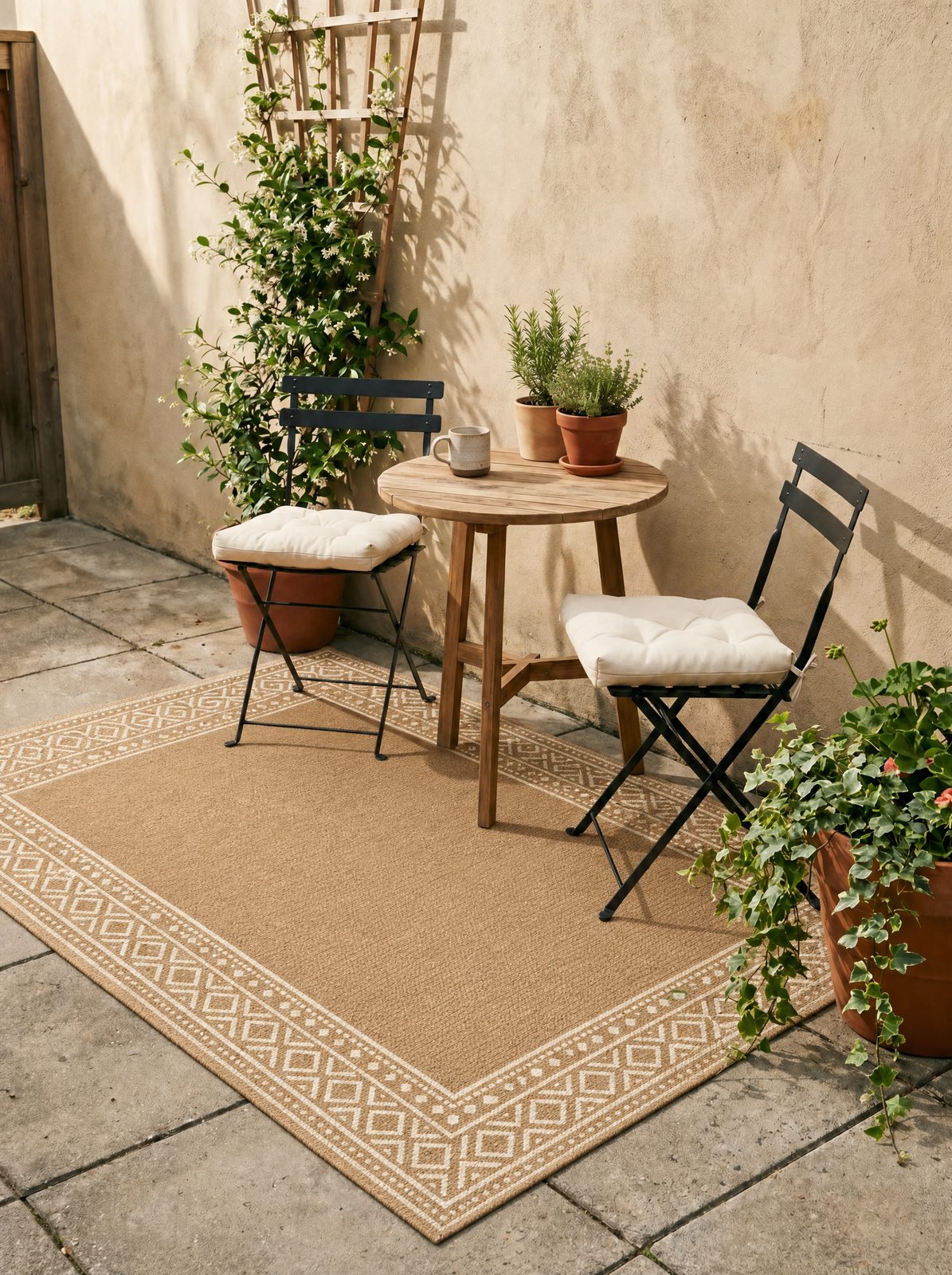
Styled lifestyle image. Click through to view current Amazon product photos and pricing.
GENIMO Outdoor Patio Rug - Boho Geometric (5' x 8')
Best for: High-traffic patios on a tight budget
$41.39
View on AmazonGot questions?
Can I use a jute or sisal rug on my wood deck?
Skip natural fibers like jute and sisal on open-air wood decks. They absorb water like a sponge, stay wet for days, and the fibers can transfer tannins straight into your wood, which is basically a permanent stain your landlord will notice at move-out. Stick to polypropylene or recycled-plastic outdoor rugs with breathable backing instead. If your deck has a solid overhang or you're in a genuinely dry climate, jute is back on the table, but run your hand underneath after rain to confirm water's draining through and not pooling.
How often should I lift my rug to dry it after rain?
After any heavy rain or humid stretch, lift the rug and prop it against a railing or wall for a few hours so air can dry both sides. If the rug stays wet underneath for more than 24 hours without lifting, that's when mildew starts. The real win is buying a rug light enough to lift one-handed in the first place, so the routine takes 30 seconds instead of being a project.
What if I already have a rubber-backed rug, should I throw it out or can I salvage the situation?
Honest answer: there's no real salvage. Rubber backing traps moisture against the wood no matter what you put underneath, so you're either replacing the rug or committing to lifting it every single time it rains so the deck can dry. If the rug is already showing the dark line on the deck underneath, stop using it on wood entirely. Move it to a concrete patio or balcony, or replace it with a breathable-backed option from the picks above.
Will any outdoor rug eventually stain my deck, even one that passes all 5 checks?
Most synthetic rugs with polypropylene fibers and non-dye-transfer backing won't stain if you're doing the basics right. But if your rug stays soaking wet in direct sun for weeks without airflow, even the best one can fade your deck's finish over time through sheer moisture exposure. Pull the rug up and move or rotate it every 2-3 months so no single spot gets hammered by constant wet-and-sun contact.
Written by KORP
Covering home decor for people who actually care how their space looks — outdoor patios, small rooms, and the details that make it feel intentional.