Quick Picks: Top 3 in 30 Seconds
Don't have time to read the full post? Start here.
 Editor's Pick
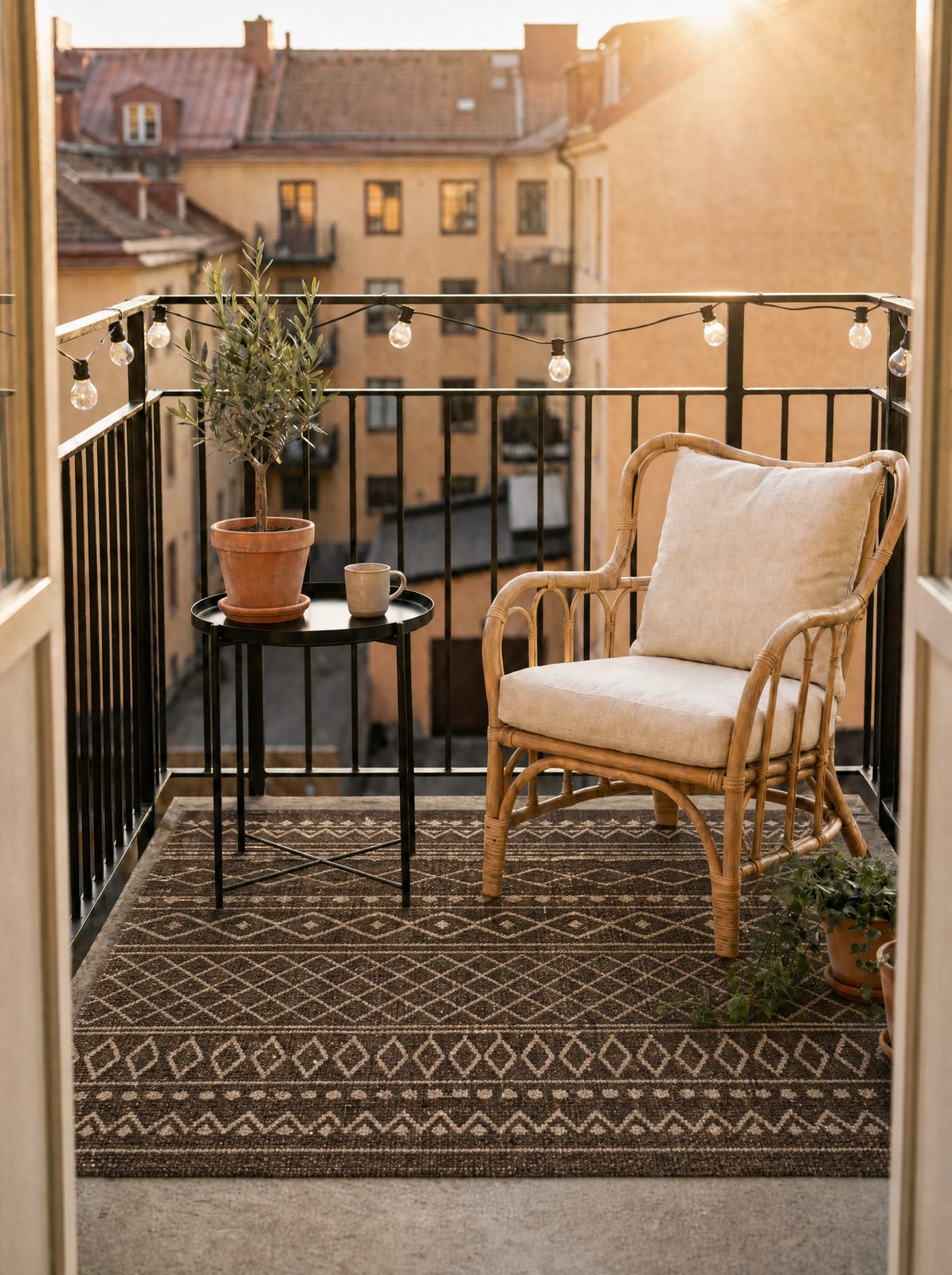
 Styled lifestyle image. Click through to view current Amazon product photos and pricing.
SAFAVIEH Washable Rug Outdoor Courtyard Collection - 8' x 10', Natural & Cream, Non-Shedding & Easy Cleaning, Ideal for Patio, Backyard, Mudroom, DIning Space (CY8521-03012)
Best for: Concrete patios where your seating keeps floating
$149.99
View on Amazon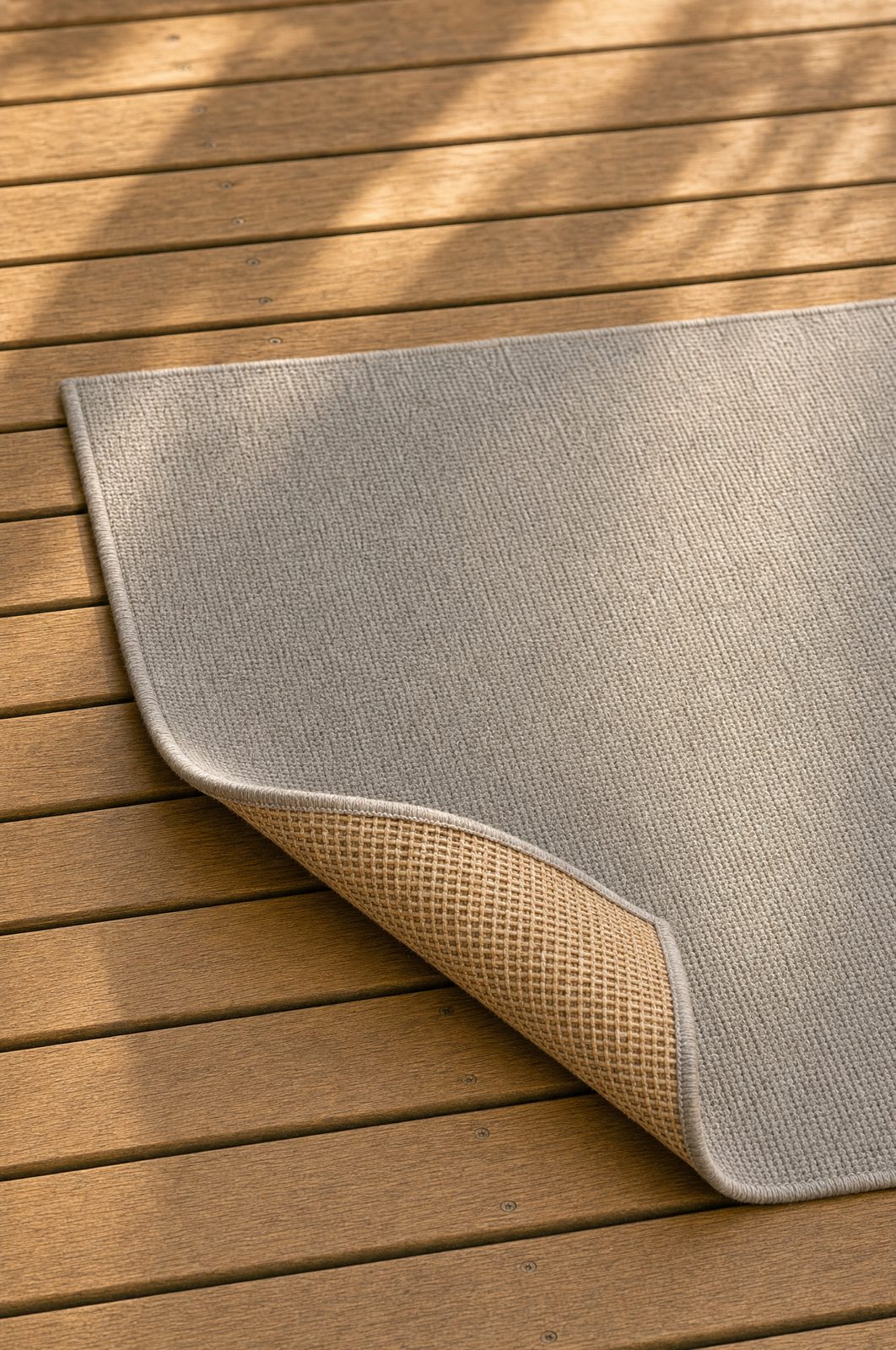
Styled lifestyle image. Click through to view current Amazon product photos and pricing.
Fab Habitat Outdoor Rug - Waterproof, Fade Resistant, Crease-Free - Premium Recycled Plastic - Neutral Ombre - Porch, Deck, Balcony, Mudroom, Laundry Room, Patio - Big Sur - Ash - 3 x 5 ft
Best for: Renters whose first outdoor rug needs to move with them
$46.99
View on Amazon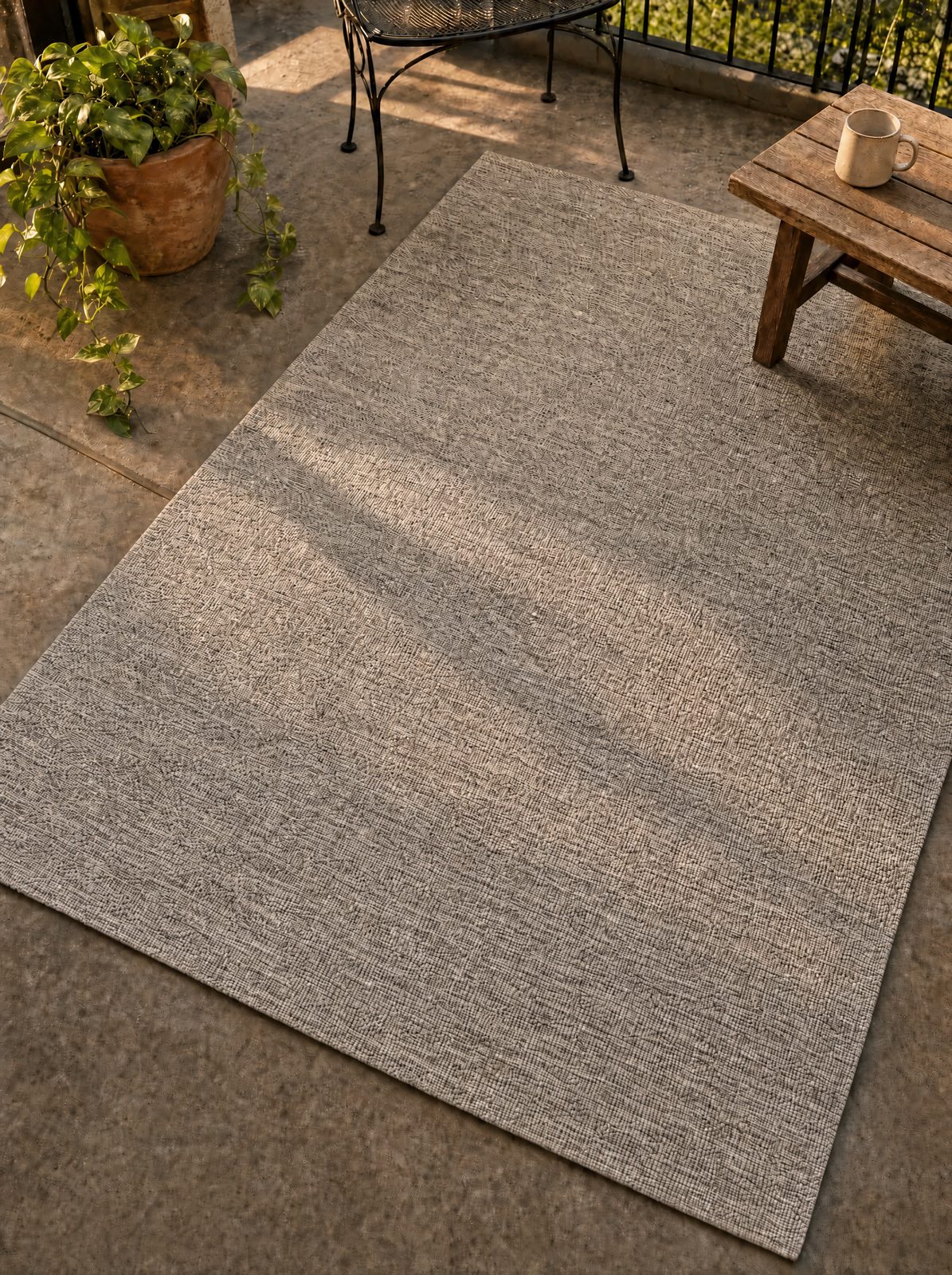
Styled lifestyle image. Click through to view current Amazon product photos and pricing.
Unique Loom Collection Casual Transitional Solid Heathered Indoor/Outdoor Flatweave Area Rug (5' 1" x 8' Rectangle, Beige/Ivory)
Best for: Small patios that want the 5×7 sweet spot without pattern
$88.99
View on AmazonTL;DR: How do you clean an outdoor patio rug? Lay it flat on the driveway, hose it down, scrub stains with diluted dish soap and a soft brush, rinse, and dry it fully — draped over a railing in the sun, never rolled up damp. Fifteen minutes, no car wash, no carpet-cleaner rental. A genuinely washable flatweave like the Safavieh Courtyard ($149.99, 4.5 stars across 2,002 reviews) makes the whole routine almost unfair.
You clean an outdoor patio rug by hosing it down on the driveway, scrubbing with diluted dish soap, rinsing, and drying it in the sun. That’s the entire routine — about 15 minutes of actual work, and it’s the difference between an outdoor rug that looks new in September and one that looks ten years old by July.
Nobody rents a carpet cleaner for an outdoor rug, and nobody should. The whole point of a polypropylene flatweave is that it shrugs off water. What actually kills these rugs isn’t dirt — it’s the two mistakes people make after the washing part: drying them wrong and ignoring them until the grime is structural. Here’s the full routine, the mistakes, and the rugs that make all of this easy.
What Do You Need to Clean an Outdoor Rug?
Five things, all of which you probably own:
- A garden hose with a spray nozzle (a watering can works for balconies)
- Dish soap — a few drops in a bucket of water, not a glug
- A soft-bristle brush or broom
- A sloped surface: driveway, patio, even a shower for small mats
- Somewhere to drape it: railing, fence, two chairs back-to-back
That’s it. Skip the “outdoor rug shampoo” — for polypropylene, diluted dish soap does the same job for pennies, and as Wirecutter’s outdoor rug testing notes, synthetic flatweaves are built to take exactly this kind of washing.
The 15-Minute Driveway Routine (Step by Step)
1. Shake and sweep first. Get the dry debris off before water turns it into mud. Two minutes.
2. Lay it flat and hose the top. Work from one end to the other with a spray nozzle. You’ll see the dirt sheet off — pollen, dust, and whatever the patio season left behind.
3. Spot-scrub with dish-soap water. Hit visible stains and high-traffic paths with the soft brush, scrubbing with the weave. For bird messes or sap, let the soapy water sit for five minutes first.
4. Rinse until the water runs clear. Leftover soap residue is a dirt magnet — this step is why some rugs look dingy again in a week.
5. Flip it, rinse the back briefly. Thirty seconds. Grit trapped on the underside grinds against the weave every time someone walks on it.
6. Dry it fully — and properly. Drape it over a railing or fence so air reaches both sides, ideally in direct sun. This is the step that decides whether you own a clean rug or a future mildew sponge.
Why the Safavieh Courtyard Makes This Almost Unfair
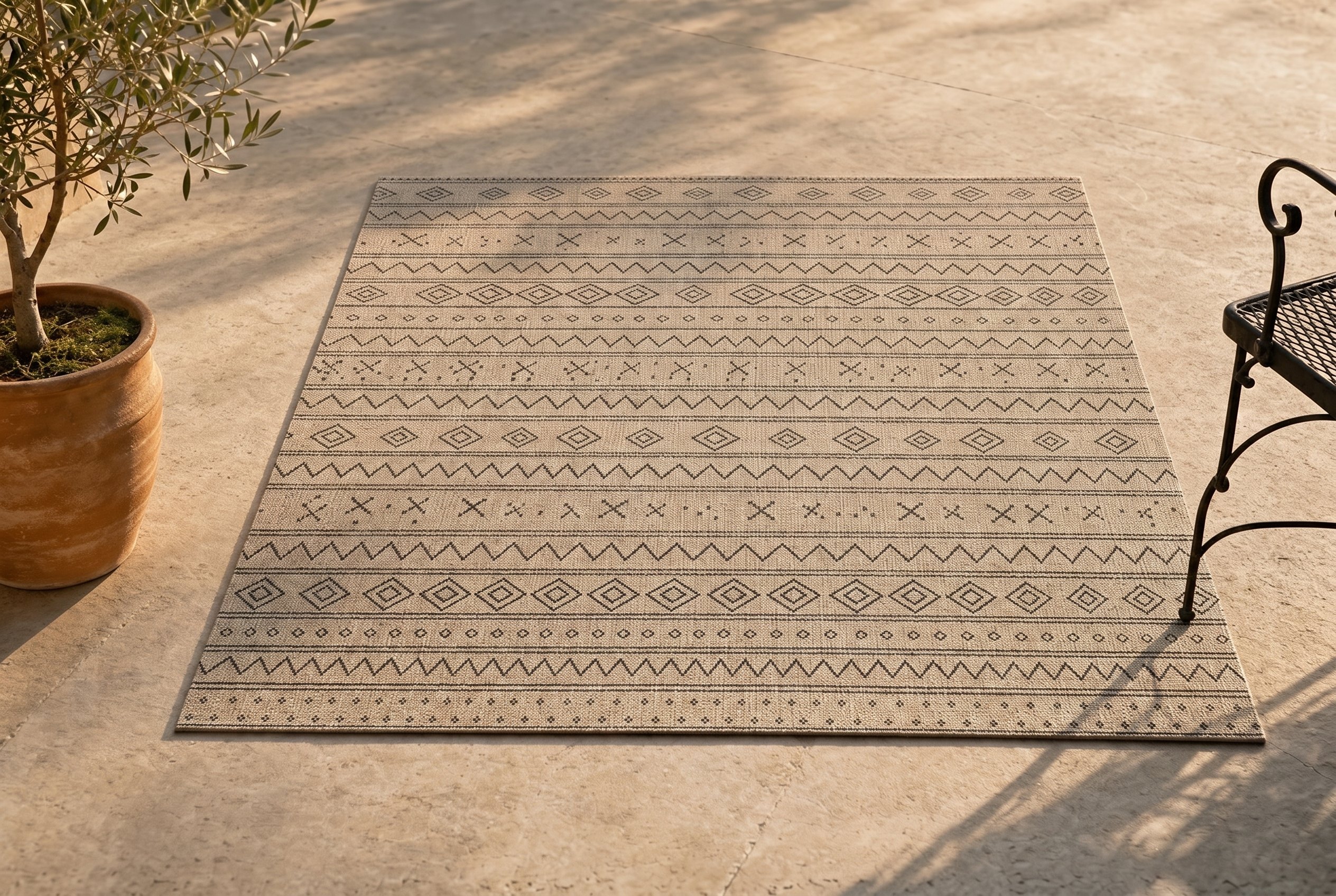
The Courtyard collection is the rug this routine was practically designed around. It’s a washable polypropylene flatweave — washable meaning the construction is meant to be hosed, scrubbed, and dried without the weave loosening or the colors bleeding. At 8x10 it covers a real patio seating area, and the natural cream colorway hides the dust that shows on darker rugs between washes.
Reviewers back this up at scale: 4.5 stars across 2,002 reviews, with the washability and lay-flat weave the most repeated praise. At $149.99 it’s the most expensive rug we recommend for small patios — but it’s the one you’ll still own in three seasons, because cleaning it is genuinely a 15-minute job.
Styled lifestyle image. Click through to view current Amazon product photos and pricing.
SAFAVIEH Washable Rug Outdoor Courtyard Collection - 8' x 10', Natural & Cream, Non-Shedding & Easy Cleaning, Ideal for Patio, Backyard, Mudroom, DIning Space (CY8521-03012)
Best for: Concrete patios where your seating keeps floating
$149.99
View on AmazonThe Budget Pick That Cleans Even Easier
If $150 isn’t in the picture, the Fab Habitat reversible flatweave is the easiest-cleaning rug in the budget tier. It’s woven from recycled plastic — water doesn’t soak in at all, it just runs off. Hose it, flip it, hose the other side, and it’s dry before you’ve put the hose away. The reversibility is a quiet cheat code: flip it mid-season and the “new” side resets the clock.
At $46.99 with 4.5 stars across 11,000 reviews, it’s the rug for anyone who wants the cleaning routine to be optional rather than necessary. Pair it with a renter-friendly setup and the whole patio resets in under ten minutes.
Styled lifestyle image. Click through to view current Amazon product photos and pricing.
Fab Habitat Outdoor Rug - Waterproof, Fade Resistant, Crease-Free - Premium Recycled Plastic - Neutral Ombre - Porch, Deck, Balcony, Mudroom, Laundry Room, Patio - Big Sur - Ash - 3 x 5 ft
Best for: Renters whose first outdoor rug needs to move with them
$46.99
View on AmazonThe Two Mistakes That Actually Wreck Outdoor Rugs
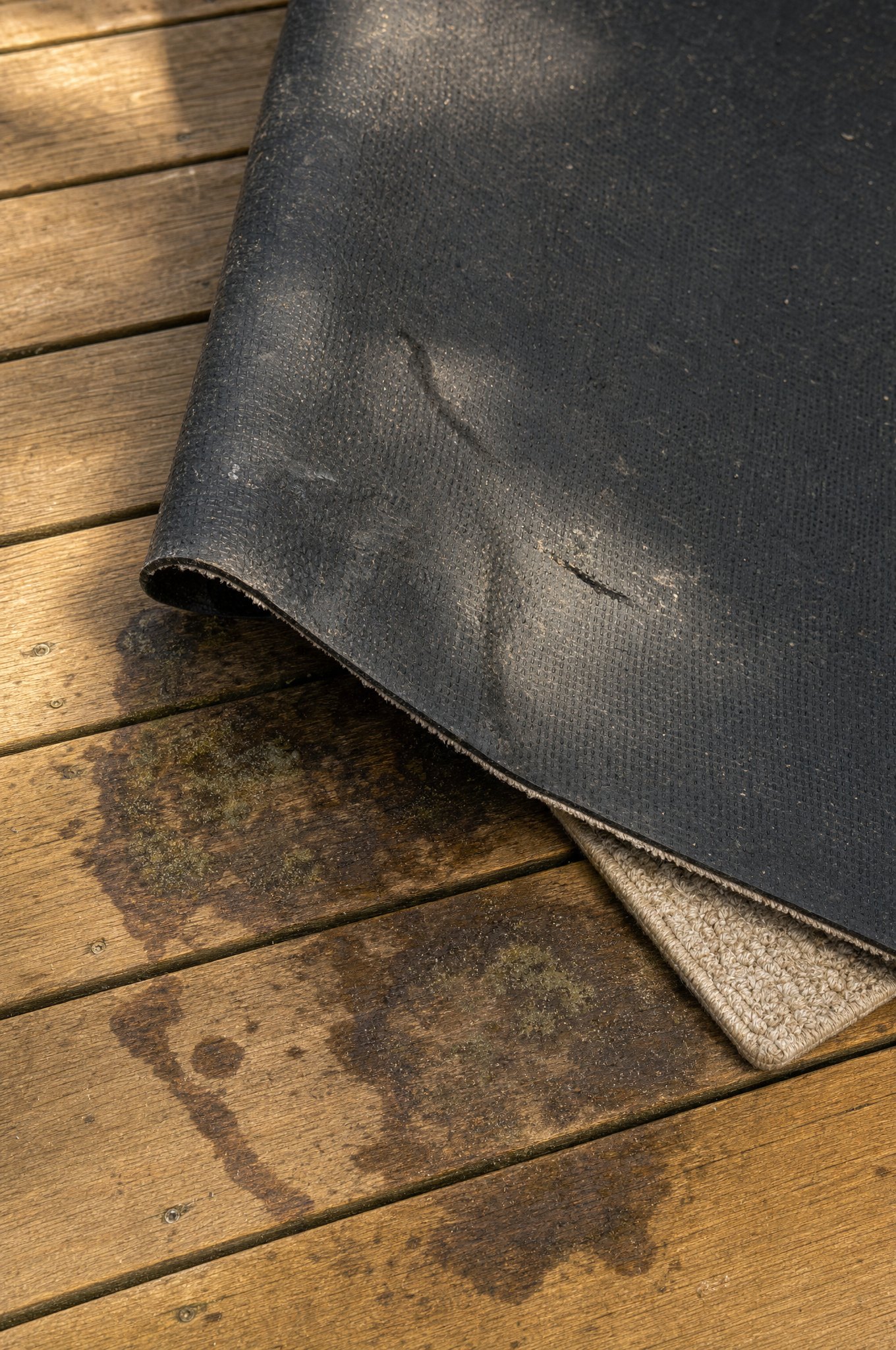
Mistake one: drying it flat on the deck
A rug that’s “dry on top” after an afternoon is often still damp underneath — and a damp underside pressed against wood is how you get mildew on the rug and dark stains on the deck. If your rug lives on wood, this matters double: we wrote a full deck-safety checklist on exactly this failure mode. Always dry vertical, always both sides.
Mistake two: rolling it up damp for winter
The single most common way good rugs die. Even slightly damp, a rolled rug is a sealed mildew incubator — you’ll unroll a biology experiment in spring. Before storage: wash, dry in the sun for a full day, then roll loosely and store somewhere with airflow. Ten extra minutes in October saves the rug.
What About Specific Stains?
Most outdoor stains come off with the standard routine, but a few earn their own play:
Bird droppings. Let them dry fully, scrape the bulk off with a putty knife or old card, then soap-scrub and rinse. Wet-wiping fresh droppings just smears them deeper into the weave.
Tree sap. Harden it with an ice cube, chip off what lifts, then dab the residue with rubbing alcohol on a rag before the soap pass. Sap is the one stain where patience beats pressure.
Sunscreen and food grease. Sprinkle baking soda or cornstarch on the spot, let it sit 20 minutes to pull the oil up, sweep it off, then do the dish-soap scrub. Dish soap exists to cut grease — this is its home game.
Red wine. Rinse immediately with plain water from the edges of the stain inward, then soap-scrub. On a cream rug like the Courtyard, speed matters more than technique.
Rust spots from furniture feet. Lemon juice and a sprinkle of salt, 30 minutes in the sun, then rinse. And put a felt pad or planter caddy under the offending leg, because the stain will come back otherwise.
The pattern in all of these: lift the solids first, use the mildest thing that works, and finish with a thorough rinse. Aggressive chemicals — bleach, ammonia, solvent cleaners — take color out of budget polypropylene faster than they take stains out.
When Is a Rug Past Saving?
Be honest about the difference between dirty and done. Ground-in grime, a mildew smell that returns after a vinegar wash, fraying edge binding, or a weave that’s gone crunchy from UV — that’s done, and no routine brings it back. Budget polypropylene gives you 2–3 honest seasons; washing monthly is what gets you to the third. If yours is past it, start with the right size this time — our size guide and small-space picks are the two posts to read before you reorder.
Related reading
- Will outdoor patio rugs ruin your wood deck? 5 checks first
- Renter-proof outdoor rugs under $50 that roll up and move with you
- What size outdoor patio rug do you actually need?
- Best Outdoor Patio Rugs Under $80: The Five Reviewers Keep Coming Back To
Shop the Look
Styled lifestyle image. Click through to view current Amazon product photos and pricing.
SAFAVIEH Washable Rug Outdoor Courtyard Collection - 8' x 10', Natural & Cream, Non-Shedding & Easy Cleaning, Ideal for Patio, Backyard, Mudroom, DIning Space (CY8521-03012)
Best for: Concrete patios where your seating keeps floating
$149.99
View on Amazon Styled lifestyle image. Click through to view current Amazon product photos and pricing.
Fab Habitat Outdoor Rug - Waterproof, Fade Resistant, Crease-Free - Premium Recycled Plastic - Neutral Ombre - Porch, Deck, Balcony, Mudroom, Laundry Room, Patio - Big Sur - Ash - 3 x 5 ft
Best for: Renters whose first outdoor rug needs to move with them
$46.99
View on Amazon Styled lifestyle image. Click through to view current Amazon product photos and pricing.
Unique Loom Collection Casual Transitional Solid Heathered Indoor/Outdoor Flatweave Area Rug (5' 1" x 8' Rectangle, Beige/Ivory)
Best for: Small patios that want the 5×7 sweet spot without pattern
$88.99
View on Amazon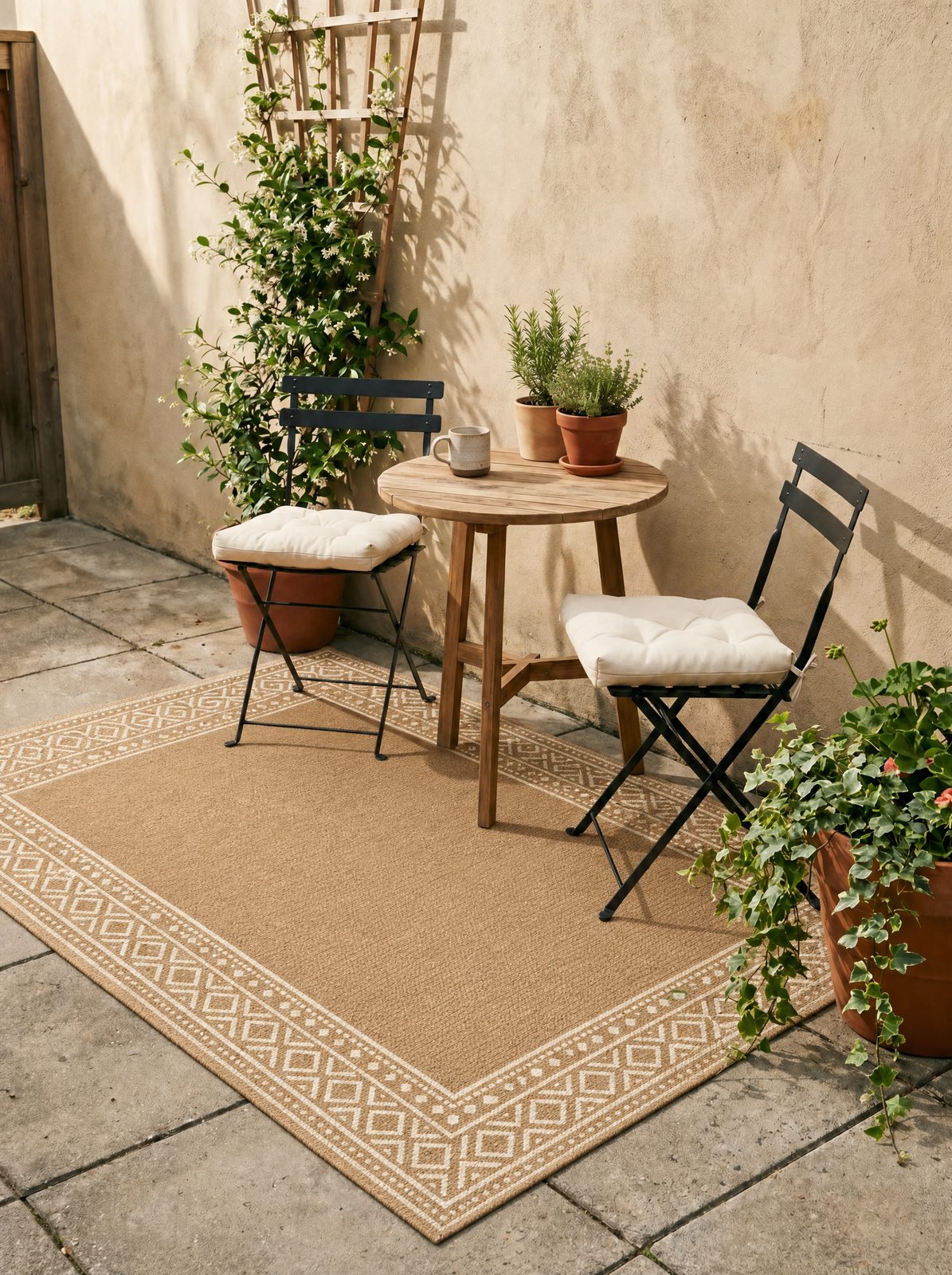
Styled lifestyle image. Click through to view current Amazon product photos and pricing.
GENIMO Outdoor Patio Rug - Boho Geometric (5' x 8')
Best for: High-traffic patios on a tight budget
$41.39
View on AmazonGot questions?
Can you hose off an outdoor rug?
Yes — for polypropylene and other synthetic flatweaves, a garden hose is the intended cleaning method, not a workaround. Lay the rug flat on a sloped driveway or patio, rinse, scrub anything stubborn with a soft brush and diluted dish soap, rinse again, and let it dry flat. The one rule that matters more than the washing: the rug must be bone-dry before it goes back on a wood deck or gets rolled up.
How often should you clean an outdoor patio rug?
Shake or sweep it weekly, hose it monthly during the season, and do a soap-and-brush wash twice a season — start and end. If it sits under trees (sap, pollen, leaf tannins) or hosts a dog, double that. The monthly rinse is what prevents the ground-in grime that makes budget rugs look tired after one summer.
How do you get the mildew smell out of an outdoor rug?
Mix one part white vinegar to four parts water, spray the whole surface, let it sit 15 minutes in the sun, scrub with a soft brush, then hose thoroughly and dry flat in direct sunlight. Sun is the active ingredient — UV kills the mildew the vinegar loosened. If the smell returns within a week, water is getting trapped under the rug; fix the drying situation, not just the smell.
Can you pressure-wash an outdoor rug?
You can, but keep it gentle: wide fan tip, lowest pressure setting, 12+ inches of distance, and always with the weave, not across it. High pressure up close shreds the fibers of budget polypropylene and blows out edge binding. Honestly, a garden hose with a spray nozzle does 95% of the job with zero risk — the pressure washer only earns its setup time on ground-in mud.
Can outdoor rugs go in the washing machine?
Almost never — even 'washable' outdoor rugs usually mean hose-washable, not machine-washable. An 8x10 won't physically fit in a home machine, and the agitation breaks down latex and edge binding on the ones that do. The exception is small 2x3 or 3x5 mats with a tag that explicitly says machine wash. When in doubt: driveway, hose, flat dry.
What's the fastest way to dry an outdoor rug?
Drape it over a railing, fence, or two patio chairs so air hits both sides, in direct sun if you have it. Flat on concrete works but takes twice as long; flat on grass or a deck is how you grow mildew on the underside. A leaf blower on the surface after rinsing cuts drying time roughly in half. Never roll or store it even slightly damp.
Written by KORP
Covering home decor for people who actually care how their space looks — outdoor patios, small rooms, and the details that make it feel intentional.